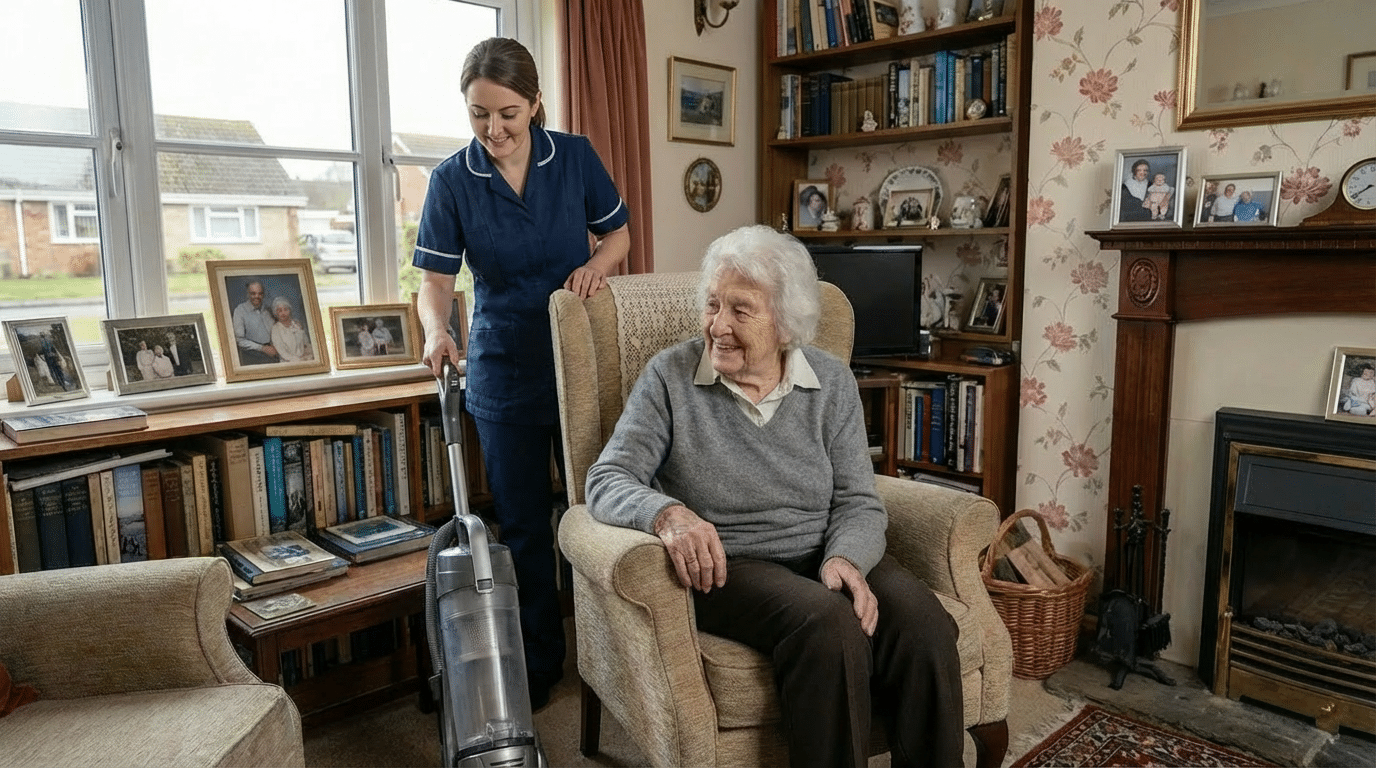
Navigating private care in the UK can sometimes feel overwhelming, but don’t worry, we’re here to help. This guide walks you through the process of hiring a carer privately in a clear and simple way. We break down the legal jargon, explain what it means to become an employer and help you understand what’s included, such as tax and payroll. You’ll also find helpful tips for creating a solid employment contract.
Choosing the right care for yourself or a loved one can be challenging, as there are many things to consider, such as specific needs and cost. If remaining at home is a priority, hiring a private carer may be a worthwhile option, but it’s also a good idea to get an understanding of similar providers and services. This guide will help support you in making an informed decision.
Alina Homecare is an award winning Home Care provider operating in the South of England. If you have extra care needs and want to receive support in the comfort and familiarity of the place you call home, we can help. Find your local Team today.
Understanding the basics of employing a carer privately in the UK
Opting to hire a private carer or a personal assistant (PA) is an option to explore when wanting greater say over who delivers your or your loved one’s care. You have full control over who you decide to deliver care based on needs and preferences. However, this option is different from using a care agency or independent providers, as you’ll be more involved. As an employer, you’ll have to manage the hiring process, decide on payment terms and handle employer tasks under UK law.
What is a private carer?
A private carer is someone who provides care and additional support directly to an individual rather than being arranged through a care agency. They provide it within the recipient’s home and help with a range of needs, including personal care, light housekeeping, companionship and support with medication. Some private carers also provide live-in services, where they move into the home to provide full time support.
When you hire a private carer, you become responsible for arranging and managing the care yourself, including recruitment, payments and legal responsibilities. Whilst this option can allow greater choice over who delivers your care, it also means there is less oversight and fewer safeguards compared to using a regulated home care provider.
To learn more about what a private carer is and how they can help, read our guide.
The differences between hiring a private carer vs. other care providers
Deciding if you should hire a private carer yourself or choose a different care option, such as a care agency or independent provider, is a big decision and it’s worth taking the time to evaluate all options. This is because each option has its own benefits and considerations that need to be accounted for. You need to think about your or your loved one’s needs to choose the most suitable option for your situation, budget and preferences.
Employing a carer privately allows you to choose the exact carer based on your preferences of personality, skills and experience. You’ll also have more control over schedules and how care is delivered. However, there are more administrative tasks involved for you.
On the other hand, other care providers are regulated by the Care Quality Commission (CQC), meaning they’re monitored, inspected and rated by an independent body to ensure high quality care is delivered to clients.1 They’re also responsible for the hiring process, checking backgrounds and paying the carers on your behalf. With this in mind, care agency and independent care provider fees are typically more than employing carers directly, however, the costs include pay, training, background checks and ongoing support.
It’s important to think about what your priorities are. If you’d prefer care to be arranged on your loved one’s behalf, an agency might be the best option for you. However, if you prefer to have total control, employing a carer privately might be a better choice.
To help you choose the right option for you or your loved one, here are some of the key differences between private carers and other care providers:
Hiring a Private Carer – Interactive Comparison | Alina Homecare
Private Carer
Home Care Provider
Care Agency
Costcost
Usually cheaper
Can be more expensive
Often more expensive
Flexibilitycost
More control over schedules
Less flexible with scheduling
Less flexible with scheduling
Regulated by the CQCquality
Unregulated and relies on your own research
Follows care standards
Follows care standards
Recruitmentadmin
You handle recruitment
Covered by the provider
Covered by the agency
Relationshipquality
Chance to form closer bonds
May feel less personal
May feel less personal
You choose the carerquality
Choose the carer directly
Have a say in your carer
Fewer choices in your carer
Continuity of the same carerquality
Always the same carer
Usually the same carer, or few carers
Carers may rotate more often
Employer responsibilities handled for youadmin
You handle these responsibilities
Managed by the provider
Managed by the agency
Backup cover if a carer is unavailablequality
No backup
Will be provided
Will be provided
Care plans and assessments includedquality
Not included
Included & updated by the provider
Included & updated by the agency
Payroll, tax and insurance managedadmin
You handle these responsibilities
Managed by the provider
Managed by the agency
Ongoing trainingquality
You’ll have to source this
Will be provided
Will be provided
Background checks/DBSadmin
You’ll need to conduct this
Covered by the provider
Covered by the provider
Setting up the employment framework
When you hire a private carer, you’re not just finding someone to help with care – you’re also becoming an employer. This means there are some important legal steps you’ll need to take to ensure that everything is set up correctly. The key is understanding your responsibilities from the start and tackling each requirement one at a time. Getting the framework right from the beginning will protect both you and your carer and give everyone peace of mind.
Registering as an employer with HMRC
As an employer, you need to sign up with HM Revenue and Customs (HMRC). This step is important as it helps you take out and pay the correct amount of income tax and National Insurance (NI) contributions from your carer’s earnings. Read this helpful step by step guide on getting ready to employ someone that HMRC have put together to make it easier to understand.
You should use the PAYE (Pay As You Earn) system. It’s a useful way to handle tax and NI deductions. You can register as an employer and handle this yourself, or work with a payroll agency or accountant that can help you with these financial tasks.
As an employer, you need to sign up with HM Revenue and Customs (HMRC). This step is important as it helps you take out and pay the correct amount of income tax and National Insurance (NI) contributions from your carer’s earnings. Read this helpful step by step guide on getting ready to employ someone that HMRC have put together to make it easier to understand.
If you do not sign up or manage your tax and NI correctly, you might face serious legal and financial complications. It’s a good idea to spend time learning about the resources provided by HMRC. It might also be worth seeking legal advice or getting help from a professional to ensure you are following the rules appropriately.
Training a private carer
Investing in good quality training when you hire a private carer is often essential. A lot of the time, their basic training won’t be as intense and to the standard offered by care agencies or other care providers. This training will give your carer the skills and knowledge required to provide quality care safely.
When looking into training for a carer, the best place to start is to understand what kind of care you or your loved one needs. This way, you can think about what skills are needed and what training will be required. For example, training in things like mobility support, first aid or specific health conditions may be essential for your or your loved one’s health and safety.
Due to CQC regulations, training is essential for home care providers and care agencies to provide for their carers. Whilst the CQC does not check private caregivers, it does provide valuable resources and support for employers needing assistance.
Insurance and statutory bodies
It’s also good to look into getting public liability insurance. This insurance can cover costs if someone makes a claim after a potential accident involving your or your loved one’s care.2 The CQC do not regulate private carers, only registered care providers. Still, it’s a good idea to read their guidelines for safe care.3
Legal obligations and rights
Understanding your legal responsibilities helps ensure both you and your carer know your rights and obligations. This includes putting a proper contract in place, including an agreed payment rate and each person’s role in the working relationship.
What am I legally responsible for when employing a carer privately?
Employing carers directly means you oversee all key decisions and responsibilities involved in arranging care. Therefore, as an employer, you have important legal and financial duties. This will help you meet your legal obligations and manage your relationship with your carer appropriately. Here are some initial legal responsibilities to consider:
Paying the correct tax and NI contributions to HMRC
Follow minimum wage regulations
Giving your carer a written contract. This should detail their pay, working hours and holiday rights
Offering a safe place to work and training when needed
The government website has a lot of useful information on employer responsibilities if you want to learn more about applicable laws.4
Creating an employment contract
A solid employment contract should include:
Job description – clearly list the tasks that the carer will complete. Include the hours they will work and any flexibility they may need
Payment – include the hourly rate or salary. Explain how often they will be paid and if they can make extra money through overtime or bonuses
Leave entitlement – describe the yearly leave, sick pay and the rules around bank holidays related to the job
It’s also important to include a clear process for handling complaints, notice periods and rules about discipline. This helps to solve problems fairly, should any issues arise in the future.
When drawing up the employment contract, be mindful of the employment status. Your carer may describe themselves as being self employed, however, your agreement may state they are your employee. This can affect things such as taxes and NI. It’s important to establish the correct status from the start.
Financial responsibilities when employing a carer
Understanding your responsibilities with money goes beyond just knowing what rate to pay when employing a carer privately. You will also need to know how to accurately calculate wages and consider tax benefits.
Knowing these financial tasks helps everything run smoothly. It also keeps you safe from unexpected costs later. This will enable you to build a trusting and clear working relationship.
How much should I pay a private carer?
When deciding on a fair rate of pay for a private carer, there are several factors that should be considered as you must ensure the rate meets legal requirements. The National Minimum Wage and the National Living Wage are the lowest amounts an employee can earn, both of which depend on age. Job experience, the tasks required and the work location can also affect pay. It’s a good idea to check the average pay for similar care jobs in your area. This can help you find a fair and competitive pay rate.
Paying a fair wage is essential to finding and retaining good carers. When you have a clear agreement about pay in the employment contract, it sets clear expectations and helps create a strong working relationship. Both sides benefit from this and it can help prevent future problems.
Managing tax implications
Tax responsibilities play a major role when employing a carer privately. If they aren’t done right, you could face compliance problems and financial penalties.
Consider your preference on how you want to file your taxes: either online or on paper. You can use HMRC’s basic PAYE tools to begin. If you feel uncertain, talking to a trained accountant can help. They can guide you through the rules and make you feel more comfortable.
Navigating through employment allowance
As an employer, you may qualify for Employment Allowance.5 This allowance can lower your NI contributions each year. It may also help you save on the extra costs of employing carers directly.
You can receive this allowance if your NI fees are below a specific amount. As with all regulations, there are rules that must be followed, so it’s important to check if you qualify with HMRC. It’s also worth spending some time understanding how to submit a claim.
When employing carers directly, it can be expensive when you consider their rate and any other related costs. This is where the Employment Allowance can be a real financial support. It will help you manage your money better and it may enable you to pay a higher wage.
Understanding auto enrolment for pensions
Workplace pensions are very important for jobs in the UK. As an employer, you must automatically enrol your workers in a workplace pension scheme. As a result, you will also be required to put money into this scheme.
The Pensions Regulator gives clear guidelines on how to enrol employees into the system for the first time.6 These guidelines include information on qualified earnings, contribution rates and tips for choosing a good scheme. If you do not follow these rules as an employer, you could face penalties.
Process for recruiting a private carer or PA
Whether recruiting for a private carer or PA, it’s good to start by doing a needs assessment. Think about the person’s situation and what necessary skills should be required of the employee. Knowing this will make the hiring process easier.
Crafting the right job advertisement
An effective job advertisement should:
Be clear and well structured
Explain the main duties and responsibilities of the role
List the skills and experience you’re looking for. Keep in mind that the right person might not have all the correct skills – that’s where training programmes can be helpful
Outline the personal qualities and characteristics that would make them a good candidate for the job
To learn more about the different skills and qualities of a carer that you may want to include in your job description, read our helpful guide.
Before advertising a private carer job vacancy, consider the following…
Make sure you know exactly what you want from a PA or carer. Do you need basic help regularly or someone skilled in specialist care?
Make a list of the tasks you want the PA or carer to help with. This might include companionship, helping with personal care, running errands or doing housework
Be sure to let candidates know you will pay them fairly and how you will build a positive work setting
Where to post your private carer job advertisement
Finding the right place to post your private carer job advertisement is important to maximise your reach to the correct applicant audience. Here are some ideas on where to advertise locally:
Put up flyers on notice boards at community centres and libraries
Newspapers and support services run by the local council can help you connect with potential applicants nearby
Online options are worth considering as they enable you to reach more people. Good results can often be found on job boards and social media groups focused on care work
Think about whether you want to handle applications yourself. You might feel safer using a PO Box or a generic email for privacy. Some people start their own limited company to make it easier to hire, as this can give some added privacy.
Conducting interviews and what to look for
The interview process helps you decide if a carer is right for you or your loved one. It’s a good idea to prepare specific questions in advance, focusing on the applicant’s experience and skills. This way, you can see how well they meet your needs. Here are some tips on preparing the questions and what to consider when conducting the interview:
Ask open ended questions that cannot be answered with just a yes or no. This will encourage more detailed answers
Explore how they manage challenging situations, i.e. how they respond to emergencies or how do they manage stress and remain calm under pressure
Check their understanding of confidentiality and privacy
Ask about their experience supporting people with additional and complex needs
Pay attention to how they communicate and if they show genuine empathy
Get a sense of how engaged and committed they are with the role
Look for qualities that are important to you and your loved one, i.e. compassion, kindness, reliability and patience
Ask for past examples of how they have demonstrated these qualities in previous roles
Trust your gut. If something doesn’t feel right, take a moment to reassess or consider other candidates
Don’t just look at their qualifications – these are only part of the candidate’s picture. It’s important to consider their personal qualities too
Ask about how they keep up with best practices in the care industry
Learn about their past experiences with similar daily tasks you’re requiring of them
Here are some practice questions to consider for the interview:
“Can you tell me about a hard caregiving situation you faced? How did you handle it?” – this will show their problem solving skills
“How do you decide which tasks to focus on when caring for someone?” – this will help you understand their organisational skills and awareness of needs
“What do you think are the important qualities of a good care worker?” –this answer will reveal their values
To discover some more Carer interview questions you could ask a candidate during the interview, our guide contains a whole range of different ones.
What kind of background checks should I be doing?
Disclosure and Barring Service (DBS) Check – a DBS check in England and Wales shows if someone has a criminal history.7 In Scotland, they use the Protecting Vulnerable Groups (PVG) check for this8
References – always reach out to past employers to check job history. Ask about the person’s trustworthiness, skills and ability of care work
Training – make sure they have proof of training or have agreed to take part in training prior to providing care
Living arrangements and their implications
When a private carer stays with the person they help, there are key points to consider. For instance, tax policies and certain employment law clauses need to be considered to ensure you are within regulations.
Understanding these requirements ensures that both the carer and the person receiving care are treated fairly. It also keeps everyone in line with legal rules. Getting expert advice about live-in care is a good idea because it comes under special employment laws.
Tax implications if your private carer lives with you
The tax rules for live-in caregivers aren’t the same as carers who live independently of those they care for. Your carer will still need to pay income tax on their earnings, but living in your or your loved one’s home might influence some benefits or allowances they’re entitled to.
Be prepared for your tax situation to potentially change. This is why it’s important to talk to HMRC or a tax expert. They can help you understand these things better. This will make it easier for you and your carer to see the financial details clearly.
Employment law considerations for private live-in carers
Hiring a live-in carer is different from hiring one who does not live with you. When you both share the same home, it’s hard to tell when they are working and when they are taking time for themselves.
It’s important to set working hours in the employment contract. This helps keep work time and personal time apart. You should also discuss any overnight care needs and what is expected of both parties. This way, you can start with clear boundaries.
As with everything, it’s smart to get help from the experts. In this case, talk to a specialist in employment law. They’ll ensure everything you put in place follows the law. It also protects the rights and safety of everyone involved.
Quick questions
What is the process to hire a private carer?
Employing a carer privately involves a few key steps. First, you need to find someone caring for the job, so you’ll need to interview the people you think may be a good fit. After that, checking their references is very important. You should then also create a clear employment contract for the job. As the employer, you will also need to manage the payroll. This means you must deduct National Insurance and follow any legal rules.
How do I manage payroll for a carer hired privately?
As an employer, it’s your job to handle payroll. You must take out income tax and National Insurance contributions from your carer’s pay. You can do this using the PAYE system. Using payroll software or getting assistance from a payroll provider can help make this task simpler.
How can I ensure my carer’s employment rights are protected within a carer hire agreement?
To protect your carer’s rights at work, you first need to give them a clear employment contract. Next, pay them the national minimum wage or an alternative competitive rate. You should also provide paid holiday time. Finally, ensure you have good public liability insurance.
What should I do if I encounter issues with my employed carer?
Check the steps for complaints in your employment contract if there’s a problem. You can also get help from the social care department of your local authority, or groups like the Citizens Advice Bureau can also give you support.
Can I recruit carers from abroad when employing a carer privately?
Recruiting caregivers from other countries for private jobs can be hard. Most people need a work visa to work legally. UK immigration rules make this necessary. They also need to consider their National Insurance and tax responsibilities.
Receive our newsletter!
Our free monthly email brings you valuable information about elderly support to help you care for your loved ones.
You can unsubscribe at any time. For more details, view our Privacy Promise.