

10 signs your elderly parent needs help
Organising elderly parent care is a significant responsibility, one that can be both rewarding and challenging. If you’re reading this, you’ve likely noticed something has changed – perhaps Mum forgot to pay an important bill, or Dad’s once immaculate garden has become overgrown. These moments can be unsettling, leaving you to wonder whether you’re overthinking or if it’s time to intervene.
You’re not alone in feeling this way. According to Carers UK, there are approximately 5.8 million unpaid carers in the UK, with many supporting elderly parents.1 Recognising when your parent needs additional support isn’t always simple, it’s often a gradual process marked by subtle changes rather than a single defining moment.
Our guide is designed for anyone who may need help with elderly parent care. It will help you identify the key warning signs that your elderly parent may need help, understand what these signs mean and explore the options available to ensure their safety, wellbeing and dignity. Whether you’re concerned about daily tasks, health issues or safety risks, we’ll provide you with the knowledge and confidence to take the next steps.
Jump to…
Why early recognition matters
Spotting the signs early can make a significant difference to your parent’s quality of life and independence. When issues are identified sooner rather than later, you have more time to:
The National Institute for Health and Care Excellence (NICE) also emphasises that early assessment and support planning for older people can prevent or delay the need for more intensive care services later.2

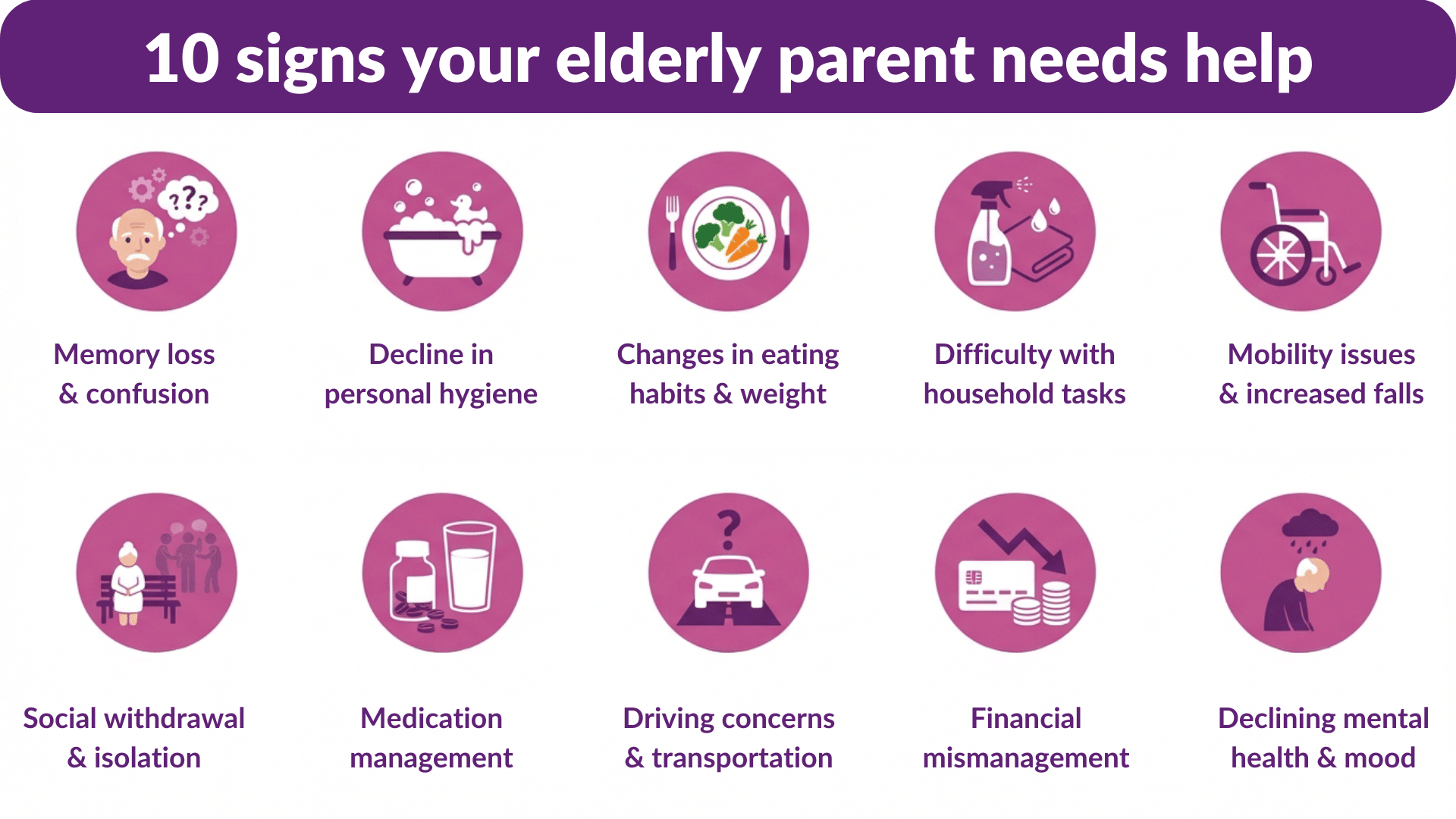
10 early signs to look out for:
01
Noticeable memory loss & confusion
Memory lapses happen to all of us, but there’s a difference between occasionally misplacing your keys and forgetting what keys are for. Therefore, it’s important to look for the following signs:
- Asking the same questions multiple times within a short period
- Difficulty following conversations or finding the right words
- Getting confused about time, dates or familiar places
- Leaving the cooker on or forgetting they’ve already eaten
- Missing important appointments or forgetting to take medication
- Repeatedly forgetting recent conversations or events
Why it matters
Memory problems can suggest various issues, from normal age-related changes to more serious issues like dementia. Alzheimer’s Society reports that there are currently over 900,000 people living with dementia in the UK, with this number expected to rise to 1.4 million by 2040.3
Even if memory loss isn’t related to dementia, it can create safety risks, from medication mistakes to getting lost whilst out and about. This is why it’s important to keep an eye on these symptoms whilst supporting elderly parents.
What you can do when supporting elderly parents
- Consider a cognitive assessment through the NHS or private provider
- Encourage a medical assessment. Many memory issues have treatable causes, such as vitamin deficiencies, depression or medication side effects
- Explore memory aids like dosette boxes, calendar reminders and clearly labelled cupboards
- Keep a diary of specific incidents to share with their GP
- Look into support services like elderly befriending services that provide regular check-ins
02
Decline in personal hygiene & appearance
Your parent may have always taken pride in their appearance, but lately you may have noticed one or more of the following:
- A noticeable body odour or unwashed hair
- An unclean living environment, particularly the bathroom
- An unusually untidy appearance that’s out of character
- Neglected dental care or bad breath
- Stained or unwashed clothing
- They’ve been wearing the same clothes for days
Why it matters
A decline in personal care can signal several underlying issues. It could indicate:
- Cognitive decline: Forgetting to bathe or not recognising the need for personal hygiene
- Depression: Depression affects approximately 22% of men and 28% of women aged 65 and over in the UK, and loss of self care is a common symptom of depression4
- Physical limitations: Arthritis, mobility problems or balance issues can make bathing, dressing or grooming difficult or even unsafe
- Vision problems: Difficulty seeing stains or marks
It’s important to remember, poor hygiene can lead to skin infections, urinary tract infections and social isolation, all of which further impact a loved one’s wellbeing.
What you can do when supporting elderly parents
- Approach the topic sensitively, focusing on your concern for your loved one’s health rather than their appearance or lack of hygiene
- Arrange an occupational therapy assessment through social services or privately
- Assess whether physical limitations are the barrier – for example, could a grab rail, shower seat or walk-in bath help?
- Check vision and hearing, as sensory impairments can contribute to neglect
- Consider professional Personal Care for help with elderly parent care, even if it’s just a few times a week
03
Changes in eating habits & weight loss
Changes in eating habits and sudden weight loss can directly impact frailty, cognitive function and infection risk; therefore, it signals a need for support to maintain independence. Poor nutrition can also lead to muscle loss, falls and, in some case, can be a symptom of an underlying health condition. Look for the following signs:
- An empty or overstocked fridge with expired food
- Difficulty using kitchen appliances or cooking equipment
- Relying heavily on ready meals, takeaways or eating the same foods repeatedly
- Scorched pans or evidence of cooking mishaps
- Significant weight loss or gain
- Skipping meals or forgetting to eat
Why it matters
Malnutrition affects approximately 3 million people in the UK, with older adults being particularly vulnerable.5 Proper nutrition is essential for maintaining strength, immunity and cognitive function. Changes in eating habits can result from:
- Cognitive issues: Forgetting to eat or not being able to prepare meals
- Dental problems: Avoiding certain foods due to pain or poorly fitting dentures
- Financial problems: Struggling to afford food
- Loss of appetite: Often linked to depression, medication side effects or a reduced sense of taste and smell
- Physical challenges: Difficulty shopping, carrying groceries or standing whilst cooking
What you can do when supporting elderly parents
- Arrange a dental check up if eating difficulties are present
- Arrange grocery delivery services, like Tesco, Sainsbury’s or Ocado
- Consider Home Care support for meal preparation or shopping assistance
- Explore financial support options like Pension Credit or Attendance Allowance
- Look into Meals on Wheels services available in your loved one’s area
- Speak to their GP about underlying health issues affecting appetite
- Stock the freezer with nutritious ready meals or batch-cooked portions
04
Difficulty with household tasks & home maintainence
A neglected home environment, such as piles of dirty dishes or laundry, and poor sanitisation, increases risks of accidents and illness.
- A once-tidy home now cluttered or dirty
- Dirty dishes accumulating in the sink
- Laundry piling up or clothes not being washed properly
- Neglected garden or home repairs
- Overflowing bins or unpleasant odours
- Piles of unopened post, including bills and other important correspondence
Why it matters
Our homes are extensions of ourselves. When someone who’s always been house proud starts to let things slide, it’s often a sign they’re struggling and you could need help with elderly parent care. Signs to look out for include:
- Cognitive changes: Difficulty organising tasks or forgetting what needs to be done
- Overwhelm: Simple tasks feel too much when someone is struggling
- Shifts in physical health: Housework can become exhausting when mobility, strength or stamina decreases
- Vision problems: Not noticing stains or clutter
When cleanliness starts to slip at home, this can create health risks, from pet infestations to trip hazards. It can also become isolating if your parent feels embarrassed to have visitors.
What you can do when supporting elderly parents
- Arrange gardening services or support from community volunteers
- Arrange professional cleaning services, even fortnightly deep cleans make a difference
- Domestic Care is great for supporting elderly parents with light housekeeping
- Help establish a simple cleaning routine with manageable tasks
- Organise important documents and create a simple filing system
- Set up direct debits for maintenance bills and online banking support
- Use technology, like reminder apps. or smart phone devices
05
Mobility issues & increased falls
Mobility issues and increased falls are among the most significant clues indicating that an elderly parent needs help, as they directly impact safety, daily functioning and independence.
- A shuffling gait or unsteady walking
- Difficulty getting up from chairs or climbing stairs
- Fear of falling or anxiety about movement
- Holding onto furniture or walls for support
- Near misses or actual falls
- Reduced activity or a reluctance to go out
- Unexplained bruises, cuts or injuries
Why it matters
Falls are the most common cause of injury-related deaths in people aged 65 and over in the UK. Each year, around one in three adults over 65 who live at home will experience at least one fall.6 Beyond the immediate injury risk, falls can lead to:
- Extended hospital stays: This could prompt the need for long term care
- Loss of confidence: Feeling worried about falling can reduce activity levels and make people more unsteady, thus increasing the likelihood or falls and social isolation
- Reduced independence: Struggling with daily activities can lessen feelings of autonomy
What you can do when supporting elderly parents
- Arrange a home safety assessment through an occupational therapist
- Consider a personal alarm or falls detector
- Encourage strength and balance exercises through NHS resources or local classes
- Ensure proper footwear, like correctly sized non-slip shoes
- Improve lighting, especially on stairs and in hallways
- Install grab rails in bathrooms and handrails on stairs
- Look into professional support for elderly parents; there are lots of Elderly Care options to discover
- Remove trip hazards like loose rugs, electrical cords and clutter
- Request a falls risk assessment from your parent’s GP or local falls prevention service
- Review medications with the GP, as some can affect balance
06
Social withdrawal & isolation
Social withdrawal and isolation in elderly parents often signal a need for help – they can suggest depression, loneliness or cognitive impairment. Key indicators include: abandoning hobbies, avoiding family, neglecting personal hygiene or home maintenance, and reduced communication
- Appearing lonely, withdrawn or disinterested
- Cancelling plans or declining invitations that they’d normally enjoy
- Losing touch with friends and social groups
- Loss of interest in hobbies and activities they once loved
- No longer attending clubs or community activities
- Reduced phone calls or contact with family
Why it matters
Loneliness and social isolation are prominent public health concerns. Age UK reports that more than 2 million people in England aged 75 and over live alone, and over 1.9 million older people often feel ignored or invisible.7 Isolation can be a result of various factors:
- Bereavement: Losing a spouse or friends can be an emotionally challenging and painful experience
- Depression: Can cause withdrawal from previously enjoyed activities
- Embarrassment: About memory challenges, incontinence or other health issues
- Hearing or vision loss: Makes social interaction difficult or exhausting
- Mobility difficulties: Making it hard to get out and about
- No longer having a driving licence: Reduces independence and access to social activities
Since chronic loneliness can affect both physical and mental wellbeing, recognising these factors early on can be of help for elderly parents when preventing further difficulties including depression, cognitive decline and cardiovascular disease.8
What you can do when supporting elderly parents
- Address any hearing or vision problems that might be barriers
- Arrange transport to social activities; many areas have community transport schemes
- Consider day centres that offer social activities and meals
- Explore helpful technology, like video calls, though ensure your parent can use it comfortably
- Investigate local community centres, lunch clubs and activity groups
- Involve them in family activities and ensure they feel included
- Look into befriending services through Age UK or local charities
- Schedule regular visits and phone calls
- Suggest they go to the supermarket during ‘quiet hours’
07
Medication management
When a senior can no longer manage their medications safely, it often signals the need for increased support. Medication errors can lead to, or are a result of, serious health issues. Look out for the following signals:
- A decline in health that might indicate medication is not being taken
- Difficulty opening pill bottles or reading labels
- Duplicate pill bottles suggesting confusion about refills
- Expired medications or excessive stockpiling
- Missed doses or taking medication at incorrect times
- Mixing up medications
- Not understanding what medications are for or how to take them
Why it matters
Medication management is important for health, particularly when managing multiple conditions. It’s estimated that wasted medicines cost the NHS £150 million annually, with poor adherence to medicines contributing a significant amount.9 Medication errors can occur due to:
- Cognitive challenges: Forgetting doses or becoming confused about administrations
- Complex medication schedules: Having to monitor multiple medications with different timings
- Physical limitations: Difficulty opening bottles or swallowing pills
- Side effects: Feeling a need to stop medications due to side effects without medical advice
- Vision problems: Unable to read labels or distinguish between medications
What you can do when supporting elderly parents
- Arrange Home Care visit times around medication administration – this can easily be arranged with Alina Homecare
- Consider monitored dosage systems or medication reminder devices
- Keep an updated medication list in an accessible place
- Request a medication review with the GP or pharmacist
- Set up reminder alarms or smartphone notifications
- Simplify the medication regime where possible
- Use a pill organise or dosette box. Many pharmacies offer pre-filled weekly dosette services
- Use the NHS New Medicine Service (NMS) offered by many pharmacies for additional support
08
Driving concerns & transportation
For many seniors, driving represents independence and acknowledging it’s no longer safe often signals that they’re experiencing, or hiding, age-related impairments. Here’s how specific driving and transportation issues serve as indicators that help is needed:
- Anxiety or stress about driving
- Avoiding driving at night, in bath weather or on motorways
- Confusion about road signs or traffic rules
- Difficulty judging distances or speeds
- Family members or neighbours expressing concern about their driving
- Getting lost on familiar routes
- Near misses or minor accidents
- Slower reaction times
- Unexplained dents, scrapes or damage to the car
Why it matters
Driving represents independence and freedom, which can make this a sensitive topic to approach. However, safety should always be the priority, both for your parent and other road users. As we get older, there are some age-related changes that can affect driving ability, including:
- Cognitive changes: Impacting judgement, attention and processing speed
- Medication side effects: Can cause drowsiness or affect coordination
- Physical limitations: Difficulty turning their head to check blind spots or operating pedals
- Slower reflexes: This can affect reaction times in emergency situations
- Vision impairment: Reduced peripheral vision, difficulty seeing at night or slower adjustment to glare
What you can do when supporting elderly parents
- Consider whether other family members can help with elderly parent care too and provide regular transport
- Encourage a check up with an optician and GP
- Explore alternative transport options. It’s good to try some other positive alternatives before suggesting stopping driving altogether
- If they must stop driving, help your loved one to maintain independence through other means
- It’s important to approach a conversation like this with empathy, acknowledging the emotional impact and potential loss of independence
- Look into community transport, taxi voucher schemes or volunteer driver services
- Review DVLA reporting requirements as certain conditions must be reported
- Suggest a driving assessment through organisations like the British School of Motoring (BSM) or local mobility centres
09
Financial mismanagement & scam vulnerability
Financial mismanagement is often an early indicator that elderly parents may need help. A noticeable shift from previously sound financial habits suggests they’re struggling to manage complex, daily tasks. Here’s how specific financial mismanagement issues indicate a need for help:
- Confusion about their financial situation
- Difficulty understanding bank statements or managing finances
- Making unusual purchases or giving money to suspicious organisations
- New “friends” showing an unusual interest in financial matters
- Overdrawn accounts or unusual bank activity
- Receiving excessive charity requests or prize notifications
- Unopened bank statements or financial correspondence
- Unpaid bills or utility disconnection notices
Why it matters
Financial abuse and scams targeting older adults are alarmingly common. Age UK reports that almost 5 million older people (aged 65+) believe they have been targeted by scammers.10 Beyond the financial loss, being scammed can cause:
- Emotional distress: Even though no one should be made to feel shame or embarrassment for falling victim to a scam, it’s sadly the reality for many. It therefore can prompt a loss of confidence
- Reduced quality of life: The repercussions of financial scamming can mean a loved one may not be able to afford necessities or desired activities
- Relationship breakdown: Particularly in cases of family financial abuse
- Vulnerability: Once a scammer identifies a target, they often seek to repeat the crime against the victim
Financial mismanagement can also result from cognitive decline, making it difficult to track expenses, understand paperwork or make sensible decisions.
What you can do when supporting elderly parents
- Arrange support through services like Trading Standards or Friends Against Scams programmes
- Consider appointing a designated person if your parent lacks capacity to manage finances
- Consider arranging Power of Attorney (both financial and health) to avoid difficulties in the future
- Educate your loved one on common scams to look for, without causing unnecessary alarm
- Monitor bank statements with permission, looking for unusual activity
- Register with the Telephone Preference Service and Mailing Preference Service to reduce cold calls and junk mail
- Report scams to Action Fraud (0300 123 2040)
- Set up direct debits for regular bills
- Speak to their bank about protective measures, as many do have safeguarding teams
- Use call blocking devices or services to prevent scam calls
10
Declining mental health & mood changes
Significant, out of character mood changes in elderly parents are often an indicator that they’re struggling with cognitive decline, physical illness or emotional distress, signalling a need for increased support or care:
- Anxiety, excessive worrying or fearfulness
- Expressing feelings of hopelessness or low self esteem
- Irritability, agitation or mood swings
- Loss of interest in activities and people
- Mentions of life not being worth living
- New physical symptoms without medical cause
- Persistent sadness, tearfulness or flat mood
- Sleep disturbances, like insomnia or sleeping excessively
- Withdrawal and isolation
Why it matters
Mental health problems in older adults are often under recognised and under treated. Depression is not a normal part of ageing, yet it affects approximately 22% of older adults in the UK.11 Mental health decline can result from numerous factors, including:
- Big life changes: Bereavement, retirement or a loss of independence
- Health conditions: Chronic pain, disability or serious illnesses
- Isolation: Lack of social contact and meaningful activities
- Medication side effects: Some medications can affect mood
- Neurological conditions: Depression often accompanies dementia, as well as Parkinson’s disease
Mental health issues have been proven to worsen physical health, increase fall risk, lead to unmet care needs and, in severe cases, contribute to suicide. Men aged 85 and over have one of the highest suicide rates of any demographic group in the UK.12 Recognising these concerns before they develop can make a meaningful difference; by learning about the early signs, you’re already taking an important step towards supporting your elderly parents’ mental wellbeing. If you’re seriously concerned about a loved one, look at the resources on the Samaritans website.13
What you can do when supporting elderly parents
- Access NHS Talking Therapies, which offers free psychological support
- Check medications for those that might affect food
- Consider befriending services and social activities to combat isolation
- Contact organisations like Age UK, who offer a free confidential helpful for older people
- Encourage your loved one to have an honest conversation with their GP
- If suicide risk is present, seek urgent help through the GP, NHS 111 or emergency services
- Look into support groups for specific conditions or circumstances
- Seek adequate pain management if chronic pain is affecting them
- Take mental health concerns seriously, they’re equally as important as physical health conditions
Having the conversation: approaching your parent with compassion
Recognising these signs is one thing but addressing them is another. Discussing needing help with an elderly parent is rarely easy. They may feel defensive, embarrassed or resistant to change. Here are some suggestions on how to approach the conversation of help to elderly parents in an empathetic manner:
Choose the right time & place
Lead with love & respect
Listen more than you speak
Focus on solutions, not problems
Enlist support
What support options are available in the UK?
Once you’ve identified that help for an elderly parent is needed, there are numerous support options available, including:
Community support
Financial support
Home Care services
Care at Home can be arranged privately or through the local council if your parent is eligible for funded care. To learn more about the care and support services we provide, contact your local Alina Homecare Team.
Legal protections
NHS & social care services
Residential care options
Technology & equipment
Taking the first step
If you recognise several of the signs above when supporting elderly parents, it’s time to act. Here’s how to begin:
Remember: you don’t have to do this alone
Subscribe to our blog newsletter!
References
1. Carers UK, “Key facts and figures about caring”, Reviewed 27 January 2026
2. National Institute for Health and Care Excellence, “Older people with social care needs and multiple long-term conditions”, Reviewed 27 January 2026
3. Alzheimer’s Society, “What are the costs of dementia diagnosis and care in the UK?”, Reviewed 27 January 2026
4. Age UK, “Policy Position Paper: Mental Health (England)”, Reviewed 27 January 2026
5. Malnutrition Taskforce, “Care Homes: Integrating good nutrition into daily practice”, Reviewed 27 January 2026
6. GOV.UK, “Falls: applying All Our Health”, Reviewed 27 January 2026
7. Age UK, “Loneliness”, Reviewed 27 January 2026
8. Campaign to End Loneliness, “Health impact”, Reviewed 27 January 2026
9. HSJ, “How improved medication adherence can prevent costly medicine waste”, Reviewed 27 January 2026
10. Age UK, “Older people, fraud and scams”, Reviewed 27 January 2026
11. Age UK, “Policy Position Paper: Mental Health (England)”, Reviewed 27 January 2026
12. Office for National Statistics, “Suicides in England and Wales: 2023 registrations”, Reviewed 27 January 2026
13. Samaritans, “If you’re worried about someone else”, Reviewed 27 January 2026