First Christmas without mum or dad: coping with grief at Christmas
The first Christmas after a parent has died can feel impossible. The adverts, music and cards all assume a full table. Every tradition has their fingerprints on it, from the way the tree was decorated to who carved the turkey. And you may be dreading it for weeks before it arrives.
There’s no right way to get through the first Christmas after a parent has died. Plan ahead, keep only the traditions that feel bearable, find a simple way to remember them and give yourself permission to step away. If one parent is still alive, make sure they’re not alone on Christmas morning and keep in touch regularly to see how they’re coping.
If this is your first Christmas without your parent, there’s no right way to get through it. Some families keep every tradition. Others go away, or skip Christmas altogether. Most do something in between. What matters is that you choose what feels bearable, and give yourself permission to change your mind.
This guide is written for adult children who have lost a parent. It covers how to plan for the day, ways to remember them, what to do about cards and traditions, and how to look after yourself. It also covers something most grief guides leave out: supporting the parent who is still here, who may be facing their first Christmas alone after decades together.
Why the first Christmas is so hard
Grief doesn’t follow a timetable, but Christmas puts it in the spotlight. A few things make this time of year especially painful.
- Everything is a reminderChristmas is built on traditions and rituals, and your parent was part of every one.
- The world expects you to be happyIt can feel like everyone else is celebrating while you’re just trying to get through the day.
- The gap is visibleAn empty chair, one less present to buy, one less card to write.
- Families are togetherBeing with relatives can bring comfort, but it can also bring tension, as everyone grieves differently.
- The anticipationFor many people, the weeks before Christmas are harder than the day itself.
Research by Age UK found that more than three quarters of people over 65 agree that the first Christmas after losing someone you love is the hardest.1 If you’re struggling, you’re far from alone.
How grief affects the whole family
When one parent dies, there are usually two kinds of grief in the family. You are grieving your parent. Your surviving parent is grieving their husband, wife or partner, often after decades together.
These griefs can look very different. You may want to talk about your parent, while your surviving parent can’t bear to. You may want to keep Christmas the same for the grandchildren, while they want to stay at home with the curtains closed. Or the other way round.
It helps to say this out loud. Recognising that you are each grieving someone differently, in your own way, can take a lot of pressure off. Neither way is wrong.
You may also find yourself so busy looking after your surviving parent that you don’t make room for your own grief. Try to find someone you can lean on too, whether that’s a partner, sibling, friend or a helpline.
Planning ahead
When you’re grieving, decisions can feel exhausting. Making a plan a few weeks before Christmas means you’re not deciding everything on the day.
- Talk as a family. Ask everyone, including your surviving parent and any older grandchildren, what they want and what they’re dreading.
- Decide where you’ll be. Some families find it easier to change the setting. Spending Christmas at a different home, or going away, can take the edge off the noticeably empty chair.
- Choose what to keep and what to pause. You don’t have to do everything you’ve always done. It’s fine to keep some traditions and drop others for this year.
- Share the jobs. If your parent always cooked the dinner or hosted, don’t feel you have to take it on alone. Split the cooking, eat out or keep it simple.
- Have a plan B. Agree in advance that anyone can step out for a walk or a quiet hour, and that it’s fine to leave early if you’re not feeling festive.
- Tell people what you need. Friends often want to help but don’t know how. A short message saying “We’re keeping Christmas quiet this year” or “We’d love to see you on Boxing Day” helps them help you.
Christmas cards
Cards are one of the first things that catch people out. Writing a card without your parent’s name, or receiving one addressed only to your surviving parent, can hurt.
- You don’t have to send cards this yearPeople will understand. Some families ask a friend or relative to let others know.
- If you do send themA short line such as “Thinking of you all this Christmas, it’s been a hard year” is enough.
- Cards still addressed to your parentMay arrive for a few years. It can help to let close friends know gently, and to warn your surviving parent that it might happen.
- Cards of sympathyOften arrive at Christmas from people who heard late. Opening them together can help.
Decorations and traditions
There’s no rule about whether to put up decorations. Some families find the tree brings comfort. Others can’t face it this year, and that’s fine too.
If you do decorate, you might:
- Hang a decoration that belonged to your parent, or one chosen in their memory
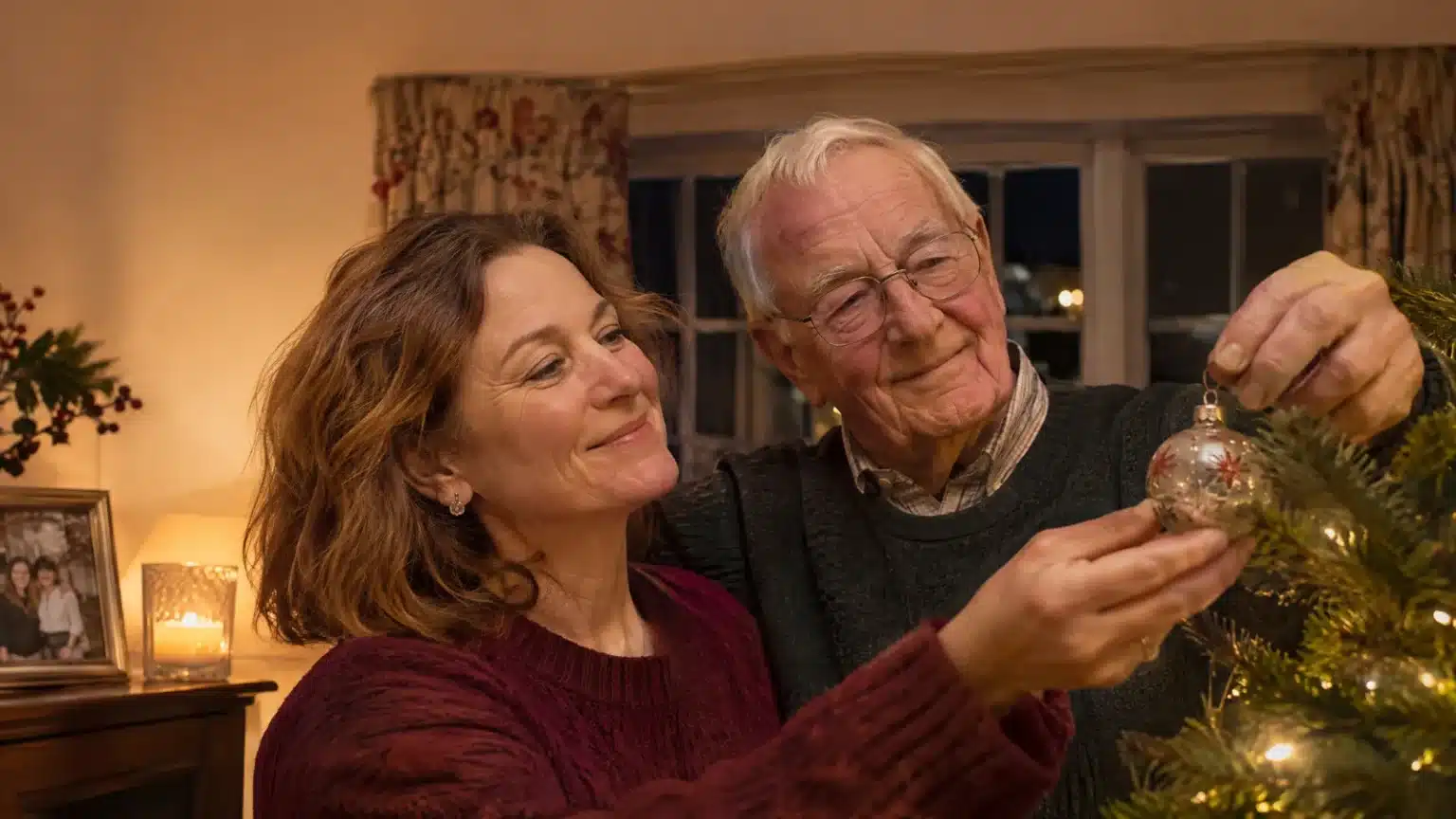
- Ask your surviving parent if they’d like help putting up their tree, rather than doing it alone
- Keep it simpler than usual
- Start a new tradition alongside the old ones
If traditions feel too painful this year, you can pause them. They will still be there next year, and you may feel differently then.
Getting through Christmas Day
It can help to think of Christmas Day in parts, rather than as one long day to get through.
The morning
For your surviving parent, waking up alone on Christmas morning can be one of the hardest moments. If you can, stay over on Christmas Eve, or arrange for someone to be with them first thing. If you can’t be there, a call first thing in the morning can mean a great deal.
Christmas dinner
The empty chair is often the moment that hits hardest. Families handle it in different ways.
- Change the seating, or eat somewhere different
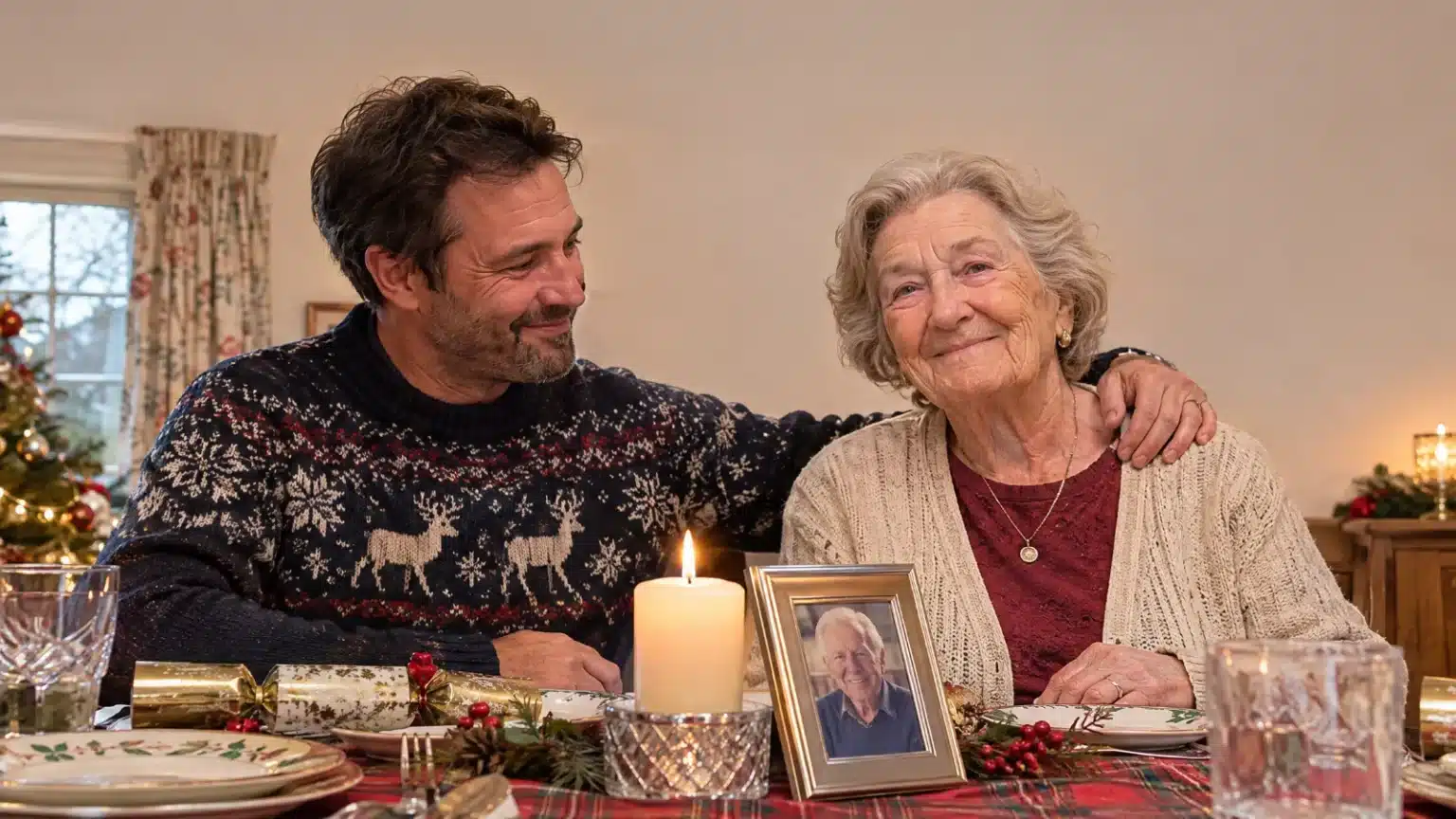
- Leave their place set, with a candle or a photo
- Raise a glass to them before you eat
- Cook their signature dish, or decide not to
- Eat out, so nobody is cooking the meal they always made
None of these is right or wrong. Talk about it beforehand so nobody is caught off guard.
The afternoon
The afternoon can drag. A walk in the fresh air, a visit to their grave or a place they loved, or a favourite film can help fill it. Some families look through photos or share memories. Others prefer to keep busy.
The evening
When visitors leave, the quiet can be hard, especially for your surviving parent. If you’re not staying, plan a call for the evening, or arrange for a friend or neighbour to pop in.
Ways to remember them at Christmas
Many families find it comforting to include their parent in Christmas in some way. Here are some ideas:
- Light a candle at dinner
- Hang a decoration with their name or photo on it
- Visit their grave or the place their ashes were scattered
- Cook their favourite Christmas food, or their signature recipe
- Play their favourite carol or Christmas song
- Watch the Christmas film they always watched
- Make a donation to a charity that mattered to them
- Write them a letter and put it in a memory box
- Ask everyone to share a favourite memory of them
- Wear something of theirs, such as a scarf, watch or piece of jewellery
- Buy a gift in their name for someone in need
- Plant a winter flowering plant or bulbs in their memory
Some people prefer to remember privately, or not at all on the day.
Supporting your surviving parent
When one parent dies, the other often loses far more than a partner. They may lose the person who did the cooking, managed the money, drove the car or remembered the birthdays. Many older people in this situation struggle quietly, and Christmas can be when it shows.
Signs they may be struggling
- Not eating properly, or losing weight
- Not sleeping, or sleeping more than usual during the day
- Not looking after themselves or the home
- Withdrawing from friends, clubs or church
- Drinking more than usual
- Seeming confused or forgetful, which grief itself can cause
- Saying things like “I don’t see the point anymore”
Some of this is a normal part of grief. But if it continues or worries you, encourage them to see their GP. If they ever talk about not wanting to live, take it seriously and get help straight away. Samaritans are available on 116 123 at any time, including Christmas Day.
Practical help that makes a difference
Often the hardest part is the tasks your other parent used to do. Over Christmas, you might help with:
- MoneySetting up direct debits, sorting the post and making sure bills are in their name
- MealsStocking the freezer, setting up food deliveries or arranging a lunch club
- Getting aboutIf your other parent did the driving, help them find community transport or a taxi account
- The homeSmall jobs like changing bulbs, bleeding radiators or clearing the gutters
- CompanyA regular phone call, a weekly visit or a befriending service
When more support could help
If your surviving parent is finding it hard to manage alone, a little help at home can make a big difference. A Carer visiting a few times a week for company, shopping and meals can help them through the first year. Our Companion Care service is designed for exactly this. You can also read our guide to loneliness and social isolation in older adults.
If your parent had dementia or a long illness
If your parent had dementia, or was ill for a long time, your grief may feel complicated. Many families describe grieving gradually, long before the death, as the person they knew changed. This is sometimes called anticipatory grief.
You might feel relief that their suffering is over, and then guilt for feeling relieved. You might also feel lost if you were their primary carer, as caring may have filled your days for years. All of these feelings are normal. It can help to talk to others who have been through the same, through a bereavement group or helpline.
If your surviving parent was the main carer, Christmas may be the first time in years they’ve had no one to look after. That can bring a sense of emptiness as well as grief. Gently encouraging them to reconnect with friends and interests, at their own pace, can help.
Children and grandchildren
Children grieve too, though it may look different. Young children may move quickly between sadness and play. Teenagers may hide their feelings.
- Use simple, honest words, and avoid phrases like “gone to sleep”
- Let them help choose how to remember their grandparent, such as making a decoration
- Keep some normal Christmas routines for them
- Let them see that it’s okay to be sad and okay to have fun too
- Tell their school if they’re struggling
When siblings grieve differently
Siblings can find themselves at odds over Christmas. One may want to keep everything the same. Another may want to avoid it. Old tensions can surface, especially if there are decisions to make about the home, belongings or care for your surviving parent.
Try to agree that this Christmas isn’t the time for big decisions. Focus on getting through the festive period together and come back to the practical questions in the new year. If things are tense, it can help to see each other in smaller groups.
Practical matters over Christmas
If your parent died recently, you may still be dealing with paperwork. Many offices, banks and register offices have reduced hours over Christmas, so expect things to take longer.
- Most estate matters can wait until January. Don’t feel you have to sort everything before Christmas
- The Tell Us Once service lets you report a death to most government departments in one go
- Post may keep arriving in your parent’s name. Registering with the Bereavement Register can reduce unwanted mail
- Check that your surviving parent has access to money over the holidays, especially if accounts were in your other parent’s name
Looking after yourself
While you’re looking after everyone else, try to look after yourself too.
- RestGrief is exhausting. Sleep when you can.
- Eat regularlyEven if you don’t feel like it.
- Be careful with alcoholIt can feel like it helps, but it often makes low moods worse.
- Step away from social media and TVWhen the happy family images get too much.
- Get outsideDaylight and a walk can make a real difference.
- Let yourself feel itSadness, anger, numbness and moments of laughter can all come in the same day. They’re all normal.
- TalkTo a friend, a sibling, a GP or a helpline.
After Christmas and into the New Year
Many bereaved people say New Year is harder than Christmas. Stepping into a new year your parent will never see can feel like leaving them behind. Plan something gentle for New Year’s Eve, or let yourself go to bed early.
The weeks after Christmas can also be hard for your surviving parent, as visitors leave and the home goes quiet. Keep up regular contact into January and February, when loneliness often peaks.
When to get more help
Grief takes time, and there’s no deadline for feeling better. But it’s worth getting support if you or your surviving parent:
- Can’t manage day to day after several months
- Feel stuck, numb or unable to function
- Are relying on alcohol to cope
- Feel hopeless, or have thoughts of not wanting to live
Start with the GP, who can talk through options including bereavement counselling. These free helplines are also there to help.
| Who | What they offer | Phone |
|---|---|---|
| Cruse Bereavement Support2 | Support for anyone who is grieving | Call 0808 808 1677 |
| Marie Curie Support Line3 | Emotional support and practical information after a death | Call 0800 090 2309 |
| Samaritans | Someone to talk to, 24 hours a day, every day of the year | Call 116 123 |
| Age UK’s Silver Line4 | Friendship and conversation for people aged 55 and over, 24 hours a day | Call 0800 4 70 80 90 |
| Age UK Advice Line | Practical advice for older people, 8am to 7pm every day | Call 0800 678 1602 |
Check opening times over the holidays on each organisation’s website.
How Alina Homecare can help
After losing a partner, many older people find the first winter alone hard to manage. Alina Homecare is an award winning Home Care provider across the south of England. Our Carers can visit your surviving parent for company, meals, shopping and help around the home, for as little or as much time as they need. With their permission, our app lets family follow their care in real time, wherever you live.
If you’re worried about how your parent is managing, find your local team below.
Find your local Alina Homecare team
Enter a postcode to see the team nearest to your loved one.
Prefer to read first? Request our Home Care brochure
Frequently asked questions
Why is grief harder at Christmas?
Christmas is full of traditions, family gatherings and expectations of happiness, so the absence of someone you love is more noticeable. Every ritual is a reminder of them.
How do I get through my first Christmas without my parent?
Plan ahead, decide what to keep and what to pause, share the jobs, find a way to remember them and give yourself permission to step away when you need to. There is no right way to do it.
Should we still celebrate Christmas after a death in the family?
That’s up to your family. Some find comfort in keeping traditions. Others prefer a quiet day or going away. You can change your mind, and next year can be different.
What can I say to someone facing their first Christmas without a parent?
Simple, honest words are best, such as “I know this Christmas will be hard, I’m thinking of you”. Mentioning their parent by name often means a lot. Offer something practical too, like a meal or a visit.
What should I write in a Christmas card to someone who is grieving?
Keep it short and warm: “Thinking of you this Christmas” or “Remembering [their parent’s name] with love”. Avoid saying “Merry Christmas” if it doesn’t feel right.
How can I support my widowed parent at Christmas?
Make sure they’re not alone on Christmas morning or evening, help with the jobs your other parent used to do, keep in regular contact into the new year and watch for signs they’re struggling to manage.
What is the hardest year of grief?
For many people, the first year is hardest because of all the firsts: birthdays, anniversaries and Christmas. For others, the second year is harder, once the support around them has faded. Both are normal.
Is it normal to feel relief after a parent dies?
Yes, especially after a long illness or dementia. Relief that their suffering has ended often sits alongside deep grief. It doesn’t mean you loved them any less.
How do I remember my parent at Christmas?
Light a candle, hang a decoration in their memory, cook their favourite dish, visit a special place or share memories as a family. Choose whatever feels right for you.
Where can I get bereavement support over Christmas?
Cruse Bereavement Support (0808 808 1677), the Marie Curie Support Line (0800 090 2309) and Samaritans (116 123) can all help. Older people can call Age UK’s Silver Line on 0800 4 70 80 90 at any time.
References
Support at home, whenever your family needs it
- Visits from an hour to Live-in Care
- Carers trained in Dementia Care
- Follow care in real time with our app