Dementia at Christmas: a practical guide for families
Christmas can bring joy to someone living with dementia: familiar carols, the smell of mince pies, time with family. But it can also be overwhelming. Routines change, the home looks different, there are more people and more noise, and the expectation that everyone will be happy can put pressure on the whole family.

To make Christmas easier for someone with dementia, maintain their usual routine, decorate gradually, keep gatherings small and have the main meal at lunchtime, before evening confusion sets in. Brief visitors to introduce themselves, give your loved one a quiet room to retreat to and take decorations down a few at a time in January.
With a little planning, Christmas can still be a happy time. This guide covers what to do in the weeks before, how to handle decorations, visitors, the meal, and how to manage the evenings, when confusion is often at its worst. It also covers what to do if your loved one lives alone, is staying with you or is in a care home, and how to look after yourself if you’re their main carer.
Around 982,000 people in the UK are living with dementia, according to Alzheimer’s Society.1 Most are supported at home by their family, so if you’re planning Christmas around dementia this year, you’re not alone.
Why Christmas can be difficult with dementia
Dementia affects how people take in and make sense of the world around them. Many of the things that make Christmas special can also make it confusing.
- A change in routineRoutine helps people with dementia feel safe. Christmas changes mealtimes, bedtimes and the people around.
- The home looks differentA tree, lights and decorations can make a familiar room feel strange.
- More peopleLots of visitors – some they haven’t seen for a while – can be tiring and hard to follow.
- An increase in noiseSeveral conversations at once, music, crackers and children playing can be overwhelming.
- Late nights and rich foodBoth can leave someone tired, unsettled or unwell.
- MemoriesChristmas may bring back memories of people who have died, and your loved one may ask for them.
- ExpectationsFamily who visit only at Christmas may be shocked by changes, which can lead to upset or disagreement.
Knowing what might be hard helps you plan around it.
Planning ahead
The more you plan, the less you’ll have to decide on the day. Start early in December.2
- Involve your loved one. Ask what they’d like to do and what matters most to them. In the earlier stages, they may have clear views.
- Keep it smaller. A quieter Christmas with fewer people is often happier for everyone.
- Think about where. Staying in their own home is usually easiest for someone with dementia. If they’re coming to you, think about how to make the space feel safe and familiar.
- Keep the routine. Plan the day around their usual mealtimes, medication times and rest.
- Plan quiet time. Build in breaks, and a quiet room they can retreat to.
- Talk to the family. Let visitors know what to expect and how to help (see below).
- Have a plan B. If things get too much, agree that it’s fine to change plans, cut a visit short or skip something.
- Book help early. If you’ll need a Carer over Christmas, or a break for yourself, arrange it as early as you can.
A simple timeline
| When | What to do |
|---|---|
| Early December | Agree plans as a family, book extra care, order prescriptions for the bank holidays |
| 2 weeks before | Start decorating, a little at a time. Brief visitors |
| 1 week before | Prepare a quiet room, check medication, stock up on familiar foods |
| Christmas Eve | Keep it calm. A carol service or a familiar film rather than a party |
| Christmas Day | Stick to usual routines, have the main meal at lunchtime and keep the evening quiet |
| Boxing Day | Plan a restful day. Many people are tired after Christmas Day |
| Early January | Take decorations down gradually and get back to the usual routine |
If you’re pausing their usual care visits over Christmas, agree the date they restart before the holidays, so their routine comes back quickly. If they’re joining you for lunch, keeping their morning visit means the day still starts the way they’re used to.
Decorations
Decorations can bring a lot of pleasure, but they can also be confusing or overwhelming. A few simple changes help.
- Decorate graduallyPut decorations up over a few days rather than transforming the room in one go.
- Involve your loved oneHanging baubles or choosing where things go can be an enjoyable activity.
- Use familiar decorationsOld favourites they recognise can bring comfort and spark memories.
- Avoid flashing lightsBlinking or chasing lights can be disorienting. Choose steady lights instead.
- Avoid decorations that look like foodChocolate, sweets or fruit shaped baubles can be eaten by mistake.
- Keep paths clearDon’t move furniture. Keep cables and decorations out of walkways to prevent falls.
- Use battery candlesReal candles are a fire risk.
- Secure the treeMake sure it can’t be knocked over.
- Think about reflectionsMirrors and shiny decorations can be confusing for some people with dementia.
Visitors
Seeing family can be wonderful, but lots of faces and conversations can be tiring and confusing. Help visitors make the most of their time.
- Space out visitsA few people at a time across the holidays is easier than everyone at once.
- Keep visits shortAn hour of good time is better than a whole day that ends in distress.
- Brief visitors beforehandLet them know about any changes since they last saw your loved one, and how best to talk to them.
- Say who you areEncourage visitors to introduce themselves each time, for example “Hello, it’s Sarah, your granddaughter”.
- Don’t quizAvoid asking “Do you remember me?” or “Do you know who this is?” It can cause embarrassment and upset.
- One conversation at a timeSeveral people talking at once is very hard to follow.
- Children are welcomeMany people with dementia love having children around. Give children simple ways to join in, such as showing a drawing or singing a carol.
Tips for talking to someone with dementia
- Speak calmly and clearly, using short sentences
- Sit at the same level and make eye contact
- Give them time to answer
- Ask one simple question at a time
- Go along with their reality rather than correcting them
- Notice their body language as well as their words
- Laugh together. Humour often stays when other things fade
The Christmas meal
Christmas dinner is often the centrepiece of the day, but it can be a challenge. A big, noisy meal with lots of choice can be overwhelming, and eating difficulties are common in dementia.3
- Eat at lunchtimeMany people with dementia are more confused and tired later in the day. A midday meal is often better than an evening one.
- Seat them carefullyA seat at the end of the table, or near a quiet wall, is less overwhelming than the middle.
- Keep the table simpleToo many glasses, cutlery and decorations can be confusing.
- Use contrasting coloursA plain coloured plate that contrasts with the food and the tablecloth makes food easier to see.
- Serve smaller portionsA large plate can be off putting, so start small. They can always have more.
- Offer familiar foodsStick to what they like and know.
- Think about finger foodsIf cutlery has become difficult to manage, offer soft finger foods such as roast potatoes, steamed carrot sticks or small sandwiches with soft fillings.
- Watch out for choking risksNuts, hard sweets and dry or chewy meat can be hard to swallow. Cut food small and add gravy or sauce. If they cough or struggle when eating, ask their GP about a swallowing assessment.
- Keep drinks comingPeople with dementia may forget to drink. Gentle reminders help avoid dehydration.
- Be careful with alcoholIt can increase confusion, affect balance and interact with medication.
- CrackersThe bang can be frightening. Pull them away from your loved one, or use snap free crackers.
Evenings and sundowning
Many people with dementia become more confused, restless or anxious in the late afternoon and evening. This is often called sundowning.4 With dark, cold afternoons and tiring days, it can be more noticeable at Christmas.
- Plan the busiest parts of the day for the morning and early afternoon
- Close the curtains and turn on lights before it gets dark
- Reduce noise in the evening: turn off the television, keep conversations calm
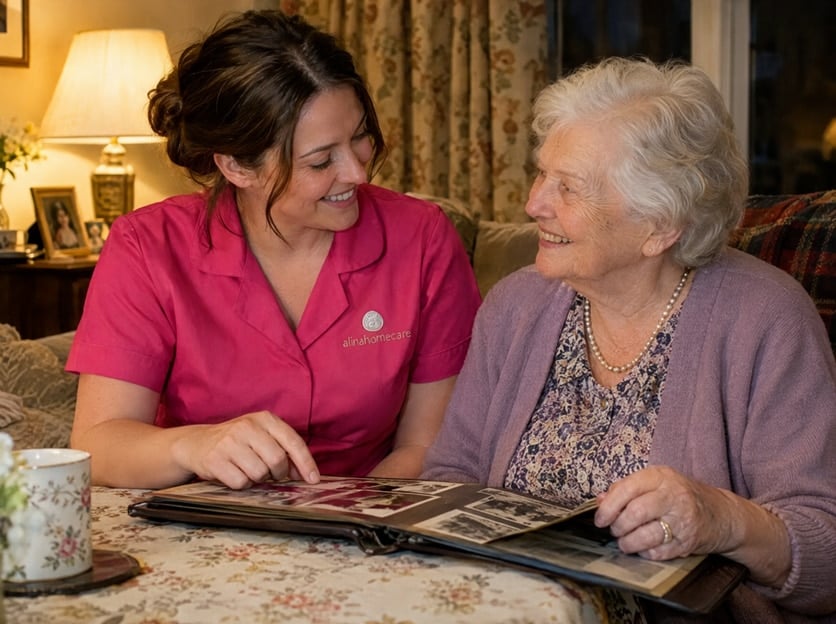
- Offer a quiet, familiar activity, such as looking at photos, listening to music or a puzzle
- Avoid caffeine and alcohol later in the day
- Keep to their usual bedtime routine
If your loved one becomes upset, stay calm, reassure them and gently move them to a quieter space.

Christmas activities for people with dementia
The right activity can help someone with dementia feel included and calm. Choose activities that suit their abilities and interests, and let them join in as much or as little as they want.
| Activity | Why it works |
|---|---|
| Singing carols | Music and songs are often remembered long after other memories fade. |
| Watching an old Christmas film | Familiar films bring comfort and are easy to follow. |
| Looking at old photos | Sparks memories and conversation |
| Decorating biscuits | A simple, hands-on activity with a treat at the end. |
| Hanging decorations | Helps them feel part of the preparations. |
| Reading Christmas cards together | A calm activity that connects them with friends and family. |
| Wrapping simple presents | Familiar and satisfying, with help if needed. |
| Folding napkins or laying the table | Gives them a useful job and helps them feel included. |
| A short walk | Fresh air and daylight can improve mood and sleep. |
| A simple quiz or game | Choose easy, familiar games such as bingo, dominoes or snap. |
| Listening to the King’s Christmas message | A familiar tradition that many people enjoy. |
More ideas are in our list of activities for older people.
Presents
Opening a pile of presents can be overwhelming. Space them out over the day, wrap them simply and help your loved one open them if needed. Tell them who each present is from.
For ideas, see our guide on gifts for people with dementia.
If your loved one lives alone
If someone with dementia lives alone, Christmas can be a particularly vulnerable time. Normal routines and services may change, and they may be alone for longer than usual.
- Plan contact for every dayShare calls and visits between the family across the whole holiday.
- Check medicationMake sure prescriptions are ordered in plenty of time for the bank holidays.
- Stock up on foodSimple, familiar meals that are easy to prepare.
- Check the heatingMake sure it’s set to a safe temperature and they can’t turn it off by mistake.
- Arrange Carer visitsA Carer visiting on Christmas Day, Boxing Day and New Year’s Day can keep routines going while the rest of the world stops.
- Think about safety technologyDoor sensors, a personal alarm or a GPS locator can give you peace of mind.
If your loved one is staying with you
Staying somewhere unfamiliar can be confusing for someone with dementia, especially overnight.
- Bring familiar things from home, such as their pillow, blanket, slippers and photos
- Put signs or pictures on the bathroom and bedroom doors
- Leave a night light on between the bedroom and the bathroom
- Keep to their usual routine as far as possible
- Give them a quiet room to retreat to
- Consider door alarms if they may wander at night
- Think about how long they stay. One night may be better than several
If your loved one is in a care home or hospital
If your loved one is in a care home or in hospital over Christmas, visiting can still be special.
- Ask staff when your loved one is usually at their brightest, and visit then
- Bring something familiar, such as a decoration, photo or their favourite treat if allowed
- Keep visits short and calm
- Join in with any Christmas activities the home is running
- Don’t feel guilty if you can’t visit on Christmas Day. A visit on another day can be just as meaningful
When things don’t go to plan
Even with careful planning, there may be difficult moments. It helps to know how to respond.
This often means they want to feel safe and familiar. Reassure them, talk about home, look at photos together or go for a short walk.
This can be very painful. Try not to correct them. Introduce yourself, stay calm and focus on spending time together.
Telling them again can cause fresh grief. It’s often kinder to talk about the person, for example “Tell me about them”, rather than correct them.
Look for the cause: noise, tiredness, pain, hunger or needing the toilet. Move to a quieter space, speak calmly and offer reassurance.
Relatives who see your loved one rarely may be shocked or disagree with how things are being handled. Try to explain calmly, and remember that the main carer usually knows best.
Looking after yourself
If you’re the main carer, Christmas can be exhausting. You may be planning, cooking and hosting, as well as caring, and it’s easy to put yourself last.
- Share the loadAsk family to help with cooking, shopping and caring.
- Let go of perfectA simpler Christmas is just as special.
- Take breaksEven half an hour on your own can help.
- Look after your healthEat, rest and keep up with your own medication.
- Ask for help earlyIf you need a break over Christmas, Respite Care can give you time off while your loved one is cared for at home.
Our guide How to support someone with dementia: what help can I get? lists support available for carers.
After Christmas
The end of Christmas can bring its own changes.
- Take decorations down graduallyAs with putting them up, a few at a time over several days is less disruptive.
- Get back to normalReturn to the usual routine as soon as possible.
- RestMany people with dementia are tired after Christmas. Plan quiet days.
- ReminisceLooking at photos from Christmas together can help your loved one remember the good times.
- Look aheadIf Christmas showed that your loved one needs more support, January is a good time to arrange it.
How Alina Homecare can help
Alina Homecare provides Dementia Care at home across the south of England. Our Carers help people living with dementia keep their routines, stay in their own home and enjoy the things they love, from a short visit to full Live-in Care. With your loved one’s permission, our app lets family follow their care in real time.
If you’re caring for someone with dementia and need support over Christmas, or a break for yourself, find your local team below.
Find your local Alina Homecare team
Enter a postcode to see the team nearest to your loved one.
Prefer to read first? Request our Home Care brochure
Frequently asked questions
How can I make Christmas easier for someone with dementia?
Keep to their usual routine, decorate gradually, keep gatherings small, have the main meal at lunchtime and give them a quiet space to retreat to.
Should someone with dementia celebrate Christmas?
Yes, if they want to. Christmas can bring a lot of joy. Adapt it to suit them, keep it calm and familiar and let them join in as much or as little as they like.
What Christmas activities are good for people with dementia?
Singing carols, watching familiar films, looking at photos, decorating biscuits, hanging decorations and simple games like bingo or dominoes are all popular.
What Christmas party games work for people with dementia?
Simple, familiar games with no pressure to win: bingo, dominoes, snap, a carol singalong, guess the Christmas song or a simple picture quiz.
Why does dementia get worse at Christmas?
Changes in routine, more people, noise, late nights and rich food can increase confusion. Symptoms usually settle once things return to normal. But confusion that comes on suddenly, or gets much worse over a day or two, can be a sign of delirium, often caused by an infection. NHS advice is to call 999 or go to A&E if someone suddenly becomes confused.5
What is sundowning?
Sundowning is increased confusion, restlessness or anxiety in the late afternoon and evening. Planning busy activities for the morning and keeping evenings calm can help.
Should someone with dementia stay with family over Christmas?
It depends on the person. Staying in their own home is often easiest. If they come to you, bring familiar items, keep the stay short and stick to their routine.
How do I explain dementia to children at Christmas?
Use simple, honest words, such as “Their brain is poorly, so they sometimes forget things”. Give children ways to join in, such as singing or showing drawings.
When should decorations come down for someone with dementia?
Take them down gradually over several days in early January, rather than all at once, so the change in the home isn’t too sudden.
Can I get help caring for someone with dementia over Christmas?
Yes. Home Care, including Respite Care, can provide support over the holidays. Book as early as you can.
References
Support at home, whenever your family needs it
- Visits from an hour to Live-in Care
- Carers trained in Dementia Care
- Follow care in real time with our app