Gifts for people with dementia: Christmas ideas for every stage
Choosing a present for someone living with dementia can feel harder than it should. The things they used to love may now be confusing. Gadgets can frustrate them. And it’s hard to know what will still bring a smile.
The best gifts for people with dementia bring comfort, help them feel like themselves or make daily life easier. In the early stages, try puzzle books, a digital photo frame or a simple music player. In the middle stages, a day and date clock or night lights help. In the later stages, a fidget blanket, soft throw or familiar music often means the most.
The best gifts for people with dementia do one of three things: they bring comfort, they help the person feel like themselves, or they make everyday life at home a little easier. This guide is grouped by stage and interest, with ideas for every budget.1 It also covers gifts for the family member who looks after them. If you’re buying for an older relative without dementia, our 100 gifts for the elderly has more ideas.
Around 982,000 people in the UK are living with dementia, according to Alzheimer’s Society2, so you won’t be the only family needing advice this Christmas.
Four questions to ask before you buy
- What stage are they at? Someone recently diagnosed may still enjoy a crossword book. Someone in the later stages may get more from a soft blanket and their favourite music.
- What did they always love? A lifelong gardener, football fan or keen baker will often respond to things linked to that, even when other memories fade.
- Who helps them day to day? If a partner, family member or Carer supports them, ask what they would find useful. They know what is used and what ends up in a drawer.
- Is it safe? Avoid small parts, anything sharp or breakable, and food or drink that could cause problems with swallowing or medication.
Quick gift picker
Early
Staying active, independent and connected
Puzzle books, a digital photo frame, gardening kit, a simple music player, a large print diary, tickets to a show
Middle
Routine, safety and confidence at home
Day and date clock, motion sensor night lights, easy fastening clothes, a simple phone with photo buttons, a memory box
Later
Comfort, calm and the senses
Fidget blanket, soft throw, hand cream and a gentle massage, familiar music, a scent box
Any stage
Connection and time together
A life story book, a day out, a visit with grandchildren, a promise of time each month
Gifts for the early stages
In the early stages, many people are still living much as they always have. Gifts that keep the mind busy and help them stay independent tend to go down well.
- Puzzle books and large piece jigsawsWord searches, simple crosswords and jigsaws of 50 to 300 pieces. Pick a picture of somewhere they know.
- A digital photo frameThe family can send new photos from their phones, which gives your loved one something to talk about with visitors and Carers.
- A simple music player or radioChoose one with a single on button and big controls, preloaded with favourite songs from throughout their life.
- A large print diary or wall plannerHelps them keep track of appointments and visitors.
- A gardening kitHerb pots for the windowsill, bulbs to plant in spring or easy grip tools.
- A favourite hobby, made easierA sketchbook and watercolour pencils, an adult colouring book or a beginner’s knitting kit with chunky needles.
- Tickets to something they loveMany theatres and cinemas now run relaxed or dementia friendly performances with the lights partly up and a quieter sound.
Gifts for the middle stages
As dementia progresses, daily life can become more confusing. Gifts that bring routine and safety can help your loved one keep living well at home.
- A day and date clockShows the day, date and whether it’s morning, afternoon, evening or night in big letters. One of the most useful gifts you can give.
- Motion sensor night lightsLight the way to the bathroom at night to help prevent falls.
- A simple phoneLarge buttons, or photo buttons that call a family member with one press. See our guide to mobile phones for the elderly.
- A memory boxFill it with objects from their life: a medal, wedding photo, programme from a match, favourite perfume.
- Easy fastening clothesCardigans with magnetic buttons, trousers with an elasticated waist and slip on shoes make dressing less stressful.
- Non-slip slippersClosed back slippers with a good grip are safest.
- Labels for the homePicture labels for cupboards and doors help with finding things.
- A key finderA small tag that beeps when lost keys or a purse need finding.
Gifts for the later stages
In the later stages, words may matter less than touch, sound and smell. Gifts that soothe and comfort are often the most meaningful.
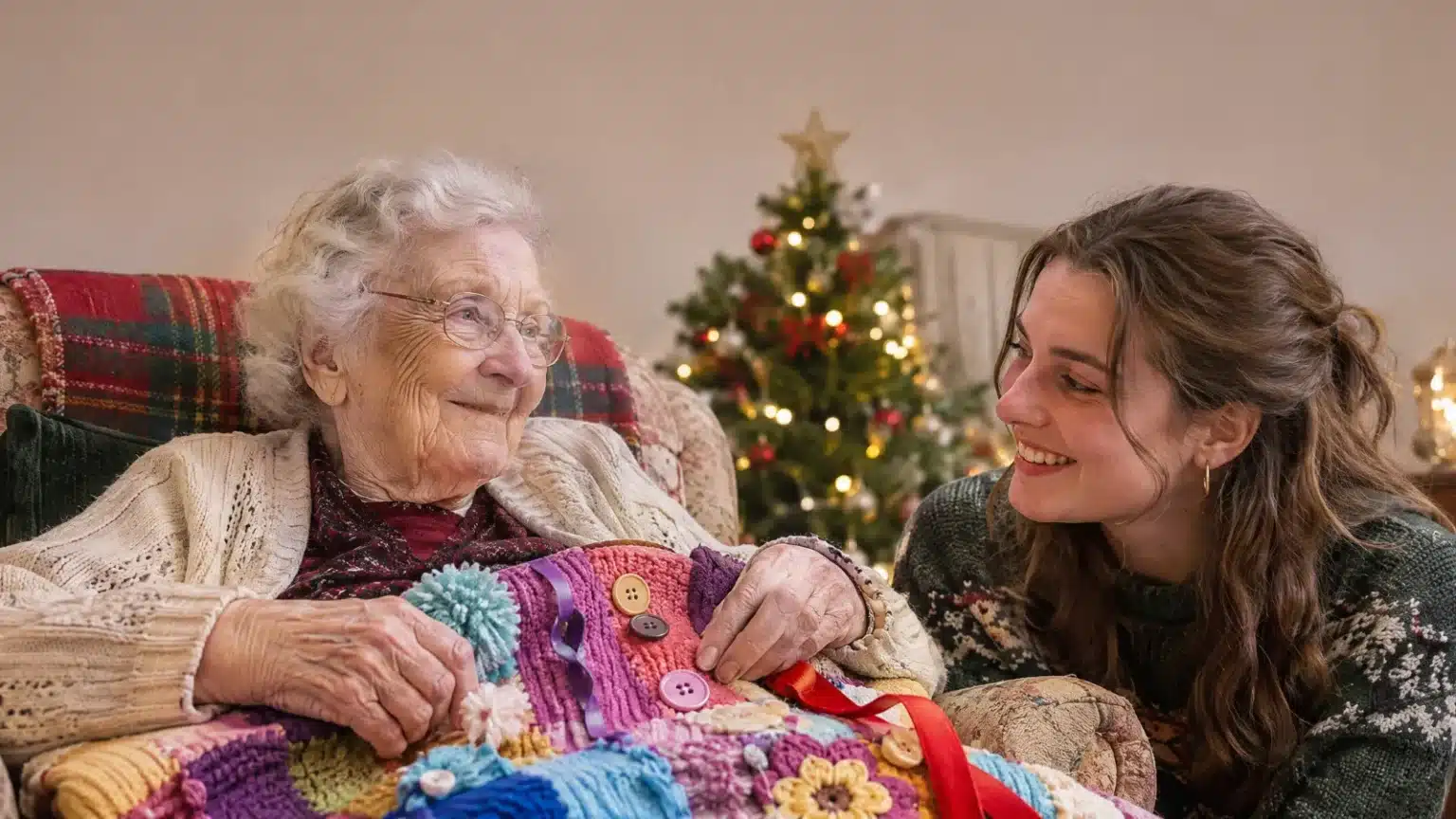
- A fidget blanket or twiddle muffButtons, zips, ribbons and textures to keep restless hands busy and calm.
- A soft throw or shawlSomething warm and familiar to have over their knees.
- Hand cream and a hand massageA gentle scented cream, with you or their Carer giving the massage, is a lovely shared moment.
- Familiar musicA playlist of songs they loved, or hymns and carols if they mean something to them. Music often reaches people when little else does.
- A robotic petA soft cat or dog that purrs, moves and responds to touch can comfort some people. Others may not like them, so watch how your loved one reacts.
- A scent boxSmall pots of familiar smells such as lavender, coffee, cinnamon or their old aftershave.
- A dollFor some people in the later stages, caring for a lifelike doll is calming and brings real comfort, while others feel it can seem childish. Introduce it gently and never force it, or talk it over with family and their care team first.3
Gifts linked to what they love
People often respond best to things connected to who they’ve always been.
| If they love | Try |
|---|---|
| Music | A simple music player, a playlist of their favourite decade, tickets to a carol concert or a singing group for people with dementia. |
| Gardening | Windowsill herbs, a bird feeder they can see from their chair, a bird song clock, a garden centre trip. |
| Football or cricket | A book of photos from their club’s past, a framed old programme, a scarf in their team’s colours. |
| Baking and cooking | A simple recipe book of their own family recipes, an apron, an afternoon baking together. |
| Animals | A robotic pet, a calendar of their favourite animal, a visit from a family pet. |
| Reading | Large print books, audiobooks on a simple player, short story collections, picture books about their local area. |
| Faith | A recording of their church’s carols, a large print prayer book, help getting to a Christmas service. |
Gift ideas for men with dementia
A framed photo of their old car or workplace, a toolbox fidget board with locks and bolts, a book about their regiment or trade, a favourite aftershave, a warm fleece with a zip and a music player loaded with their favourite hits.
Gift ideas for women with dementia
A soft cardigan with easy buttons, a favourite perfume, a charm bracelet with family initials, a scrapbook of family weddings and holidays, nail care with you or their Carer and a music player loaded with the songs they danced to.
Gifts under £10
- A photo mug or calendar with family pictures
- A large print word search book
- Fluffy socks with grips
- A bird feeder and seed
- A pot of hyacinth bulbs
- A favourite hand cream
- A CD or download of their favourite singer
- A simple wall calendar with family birthdays already filled in
The gift of time
Many families say the best present they gave was not something wrapped. Time together, without rushing, means a lot to someone living with dementia. You could:
- Make a homemade voucher book: a walk in the park, afternoon tea, time looking at old photos
- Start a life story book together, filling in a few pages each visit
- Take them to a place that matters to them, outside the busy Christmas period
- Record a video message from family who can’t visit
Technology gifts: what works and what doesn’t
Technology can be a brilliant help for someone living with dementia, or a box that never gets opened. The difference is usually how simple it is and whether someone sets it up for them.
| Gift | Works well when | Think twice if |
|---|---|---|
| Digital photo frame | Family upload photos regularly and it’s set to switch on and off by itself | It needs Wi-Fi that your loved one can’t reconnect if it drops |
| Simple music player | It has one button to play and is loaded with songs from their past | It needs a phone or app to choose music |
| Smart speaker | A family member sets up reminders and favourite radio stations | Your loved one finds a voice from nowhere confusing or frightening |
| Picture phone | It has large photo buttons that each call one person | They already struggle to recognise faces in photos |
| Day and date clock | It’s placed where they sit most of the day | Their sight makes the screen hard to read; choose the largest display |
| Tablet | It’s locked to one or two apps such as video calls and photos | They’ll need to manage updates, passwords or settings |
| GPS locator | They walk alone and may get lost, they’ve agreed to use it and it’s worn or carried every day | They’re likely to take it off or leave it at home |
Whatever you choose, set it up before you wrap it, write simple instructions in large print and show their Carer, family or friendly neighbours how it works.
Gifts for someone in a care home or hospital
If your loved one is in hospital or a care home over Christmas, a few things are worth considering before you buy.
- Label everythingClothes and belongings can go missing. Iron on or sew in name labels.
- Ask what’s allowedSome homes have rules about electrical items, plants, candles or food. A quick call saves disappointment.
- Make their room feel like theirsA familiar blanket, a framed photo, a cushion from home or a calendar of family pictures.
- Think about spaceRooms are often small. Choose things that are useful or comforting rather than big and overwhelming.
- Help staff get to know themA one page profile of their life, likes and dislikes helps everyone caring for them.
- Plan your visitYour time is still the best present. Ask staff when your loved one is usually at their brightest and visit then.
Stocking fillers
- A favourite chocolate or sweet from their childhood, if safe for their diet
- A soft hat or scarf in a colour they love
- A tube of hand cream in their favourite scent
- A pack of playing cards with large numbers
- A small fidget toy or stress ball
- A lavender bag for their pillow
- A pocket photo album of grandchildren
- A word search or colouring book
Gifts children and grandchildren can make
Homemade gifts from grandchildren are often treasured, and making them can help children understand and stay close to a grandparent with dementia.
- A drawing or painting framed for their room
- A hand print calendar for the new year
- A recorded message or song on a simple voice recorder
- A memory jar filled with notes of favourite times together
- A scrapbook of family photos with large, simple captions
- Salt dough decorations for their tree
Gifts that last all year
Christmas is one day, but some gifts give something to look forward to all year.
- A monthly flower or plant delivery
- A subscription to a large print magazine about a lifelong interest
- Regular visits from a Companion Carer for outings, hobbies and a chat. Read more about Companion Care
- A family calendar of planned visits and outings for each month
- Membership of a garden, heritage site or museum they love, with a promise to take them
Gifts for the family carer
If a husband, wife, son or daughter looks after someone with dementia, their needs are easy to forget at Christmas. These gifts can make a real difference.
- A breakA few hours or a few days off while a trained Carer steps in. Respite Care can be arranged at home, so routines stay the same for their loved one.
- Ready mealsA freezer full of homemade or delivered meals.
- A cleaner for a monthOne less job to think about.
- A promise to sitAn evening where you stay with their loved one so they can go out. A sitting service can cover the evenings you can’t.
- Something just for themA massage, a meal out or a book, with the time arranged so they can actually use it.
Gifts to avoid
- Anything with lots of buttons, passwords or settings
- Small parts that could be swallowed, or fragile glass
- Strong smells, flashing lights or loud noises that can overwhelm
- Food or alcohol that may not suit their diet, swallowing or medication
- Clothes in a new style they won’t recognise as theirs
- Too many presents at once
- Photos that prompt them to ask for someone who has died, in case it upsets them
Making opening presents easier
The way you give a present matters as much as the present itself.
- Wrap simply. Gift bags or loosely wrapped paper are easier than tape and ribbon.
- One at a time. Opening a pile of presents can be overwhelming. Space them out across the day.
- Say who it’s from. A small photo of the giver on the tag may help.
- Show them how it works. Then leave it within reach so they can come back to it.
- Tell their Carer. If your loved one has a Carer, let them know about new gifts so they can encourage their use.
For more ideas on the day itself, read our guide to dementia at Christmas.
How Alina Homecare can help
Alina Homecare provides Dementia Care at home across the south of England. Our Carers help people living with dementia stay in their own home, keep their routines and do the things they enjoy, from visits of an hour to full Live-in Care. With your loved one’s permission, our app lets family follow their care in real time.
If you’re looking after someone with dementia and need a break this winter, or you’d like to talk about support at home, find your local team below.
Find your local Alina Homecare team
Enter a postcode to see the team nearest to your loved one.
Prefer to read first? Request our Home Care brochure
Frequently asked questions
What is a good gift for someone with dementia?
Gifts that bring comfort, help them feel like themselves or make daily life easier. A day and date clock, a fidget blanket, a simple music player with their favourite songs and a photo book of family are among the most popular.
What do people with dementia need most?
Routine, reassurance and connection with the people they love. Time together is often worth more than any present.
Are robotic pets good for people with dementia?
Some people find them very comforting, especially in the later stages. Others don’t take to them. Watch how your loved one responds and don’t push it.
What should I not buy for someone with dementia?
Avoid complicated gadgets, small or fragile items, strong smells or flashing lights, and food or drink that may not suit their diet or medication.
What can I give a carer looking after someone with dementia?
Time off is usually the most welcome gift. You could arrange Respite Care, offer to sit with their loved one or take a job off their list.
What are good gifts for someone with dementia in a care home?
Small, labelled, comforting things that make their room feel like home: a familiar blanket, framed family photos, a simple music player and a soft cardigan. Check with the home what is allowed before you buy.
What are sensory gifts for dementia?
Gifts that engage touch, sound, sight or smell, such as fidget blankets, textured cushions, scented hand cream, a scent box, bird song clocks and familiar music. They can calm restlessness and are especially helpful in the later stages.
Should I send a Christmas card to someone with dementia?
Yes. Cards can bring a lot of pleasure. Write clearly in large letters, include a photo of yourself and say who you are, for example “With love from your granddaughter Sarah”.
Is a digital photo frame a good idea if they don’t always recognise family?
It can still be. Older photos from earlier in their life are often recognised more easily than recent ones. Mix in photos of places, pets and events as well as people, and add simple captions where possible.
Do these ideas work for birthdays and Mother’s or Father’s Day too?
Yes. Every gift in this guide works all year round. Gifts linked to their interests, comfort items and the gift of time are good choices for any occasion.
References
Support at home, whenever your family needs it
- Visits from an hour to Live-in Care
- Carers trained in Dementia Care
- Follow care in real time with our app