Loneliness at Christmas: helping an older relative who may be alone
For many older people, Christmas is the loneliest day of the year. The shops are busy, the television is full of families round the table, and yet the phone may not ring. Age UK’s research found that 1.6 million older people say Christmas Day is the hardest day of the year.1
If an older relative may be alone this Christmas, plan calls at set times, arrange a visit, a delivered dinner or a place at a community lunch, and keep in touch through the quiet days up to New Year. Older people on their own can call Age UK’s Silver Line free on 0800 4 70 80 90, 24 hours a day, including Christmas Day.2
If you’re worried that your parent, grandparent or an older friend or neighbour will be on their own this Christmas, you can make a real difference, even from a distance. This guide explains why loneliness hits older people hard at this time of year, the signs to look for and practical ideas to help over the whole festive period, not just on the day. There’s also a section for older readers who expect to be on their own this year.
Why Christmas can be so lonely for older people
Loneliness doesn’t always look the way we expect. It can affect people who live with others, see family regularly and seem to have a full life. At Christmas, a few things combine to make it worse.
- LossMany older people have lost a spouse, partner, friends or siblings. Christmas brings back memories of anyone who’s missing.
- Family far awayChildren and grandchildren may live a long way off, work over Christmas or spend the day with the other side of the family.
- Health and mobilityGetting out to church, the shops or a friend’s home can be harder in winter, especially in the cold or icy weather.
- Shorter daysLong, dark evenings mean more hours at home with nothing to break them up.
- Clubs and groups closeLunch clubs, day centres or church groups often stop over the holidays, just when people need them most.
- Hearing and sight lossThese make busy family gatherings tiring and phone calls hard work.
- MoneyWorries about heating, food or presents can stop people joining in.
- Not wanting to be a burdenMany older people hide how lonely they feel so their family won’t worry.
Being alone is not the same as being lonely
Some older people are perfectly happy spending Christmas on their own, with a good film and their own routine. Others feel lonely in a room full of family, because they can’t hear the conversation or feel overwhelmed with it.
The question to ask isn’t “Will they be alone?” but “How will they feel?” The only way to find out is to ask, gently and without assuming. “What would you like to do this Christmas?” usually works better than “You can’t be on your own on Christmas Day.”
Signs an older relative may be lonely
Because many older people hide loneliness, it helps to know the signs.
- Calling more often than usual, or staying on the phone longer
- Talking a lot about the past, or about people who have died
- Saying things like “I don’t really see anyone now” or “The days are long”
- Not leaving the home for days at a time
- Losing interest in hobbies, food or their appearance
- Sleeping a lot in the day, or not sleeping at night
- Seeming low, anxious or more forgetful than usual
- Becoming very attached to a regular visitor, such as a delivery driver
One or two of these are not a cause for alarm, but they are worth noticing. Our guide to loneliness and social isolation in older adults explains more.
Why it matters for their health
Loneliness is more than feeling sad. Long term loneliness is linked with poorer physical and mental health, including depression, heart disease and a faster decline in memory and thinking. It can also lead people to stop eating properly, stop going out and stop looking after themselves.
The good news is that small, regular contact can help a great deal. A phone call at the same time each day, a weekly visit or a friendly face at the door gives structure and something to look forward to.
If you can’t be with them at Christmas
Not everyone can be with an older relative on Christmas Day. Work, distance, your own family or illness can all get in the way. Here are ways to help them feel remembered.
- Plan the calls. Agree times in advance, such as Christmas morning, after lunch and early evening, so they know when to expect you. Share the calls between the family.
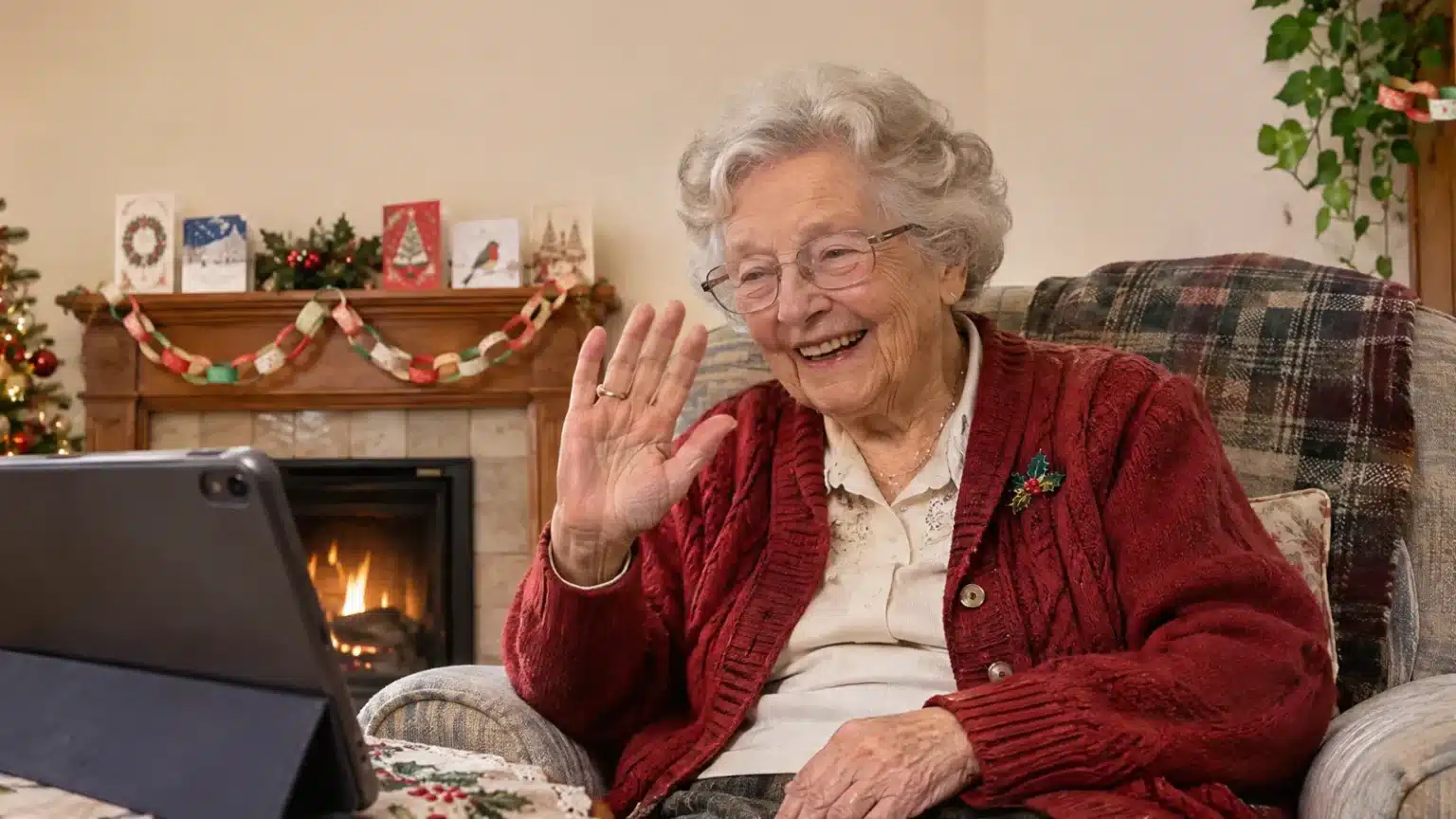
- Set up a video call. If they have a tablet or smartphone, set it up before Christmas with instructions on how to call you. Practise together first.
- Have dinner delivered. Order a Christmas dinner from a local café, pub or meal service, or drop round a plated meal they can simply heat up.
- Send a box of small presents. Several small gifts to open across the day, each with a note, can make the day feel less empty.
- Ask a neighbour or friend. Someone nearby may be happy to pop in for a cup of tea or a mince pie.
- Book them a place at a community lunch. Many churches, community centres and pubs host free or low cost Christmas lunches for people on their own, often with transport.
- Get the grandchildren involved. Homemade cards, drawings or a video of the children opening their presents can bring a lot of joy.
- Watch together, apart. Agree to watch the same film or the King’s Christmas message at the same time and call afterwards.
- Arrange a visit from a Carer. A Home Care visit on Christmas Day can mean someone checks in, helps with lunch and stays for a chat.
- Tell them about the Silver Line. Age UK’s Silver Line is a free, confidential helpline for people aged 55 and over, open 24 hours a day, every day, including Christmas Day. The number to call is 0800 4 70 80 90.
- Make sure they’re warm and stocked up. Check they have food, medication and heating for the bank holidays.
- Plan a visit soon after. Having a date in the diary for early January gives them something to look forward to.
If they’re coming to you
Inviting an older relative to stay is lovely, but a busy family Christmas can be overwhelming for someone used to a quiet home. A few small things help them feel included rather than lost. If you’re thinking about a longer stay, our guide to living with elderly parents covers what to consider.
- TravelOffer to collect them, or arrange a taxi. Long journeys in the cold can be tiring.
- A quiet roomGive them somewhere to rest away from the noise.
- HearingSeat them where they can see faces, turn the music down at dinner and check their hearing aid batteries.
- MobilityClear walkways, put a night light on the way to the bathroom and offer a chair with arm rests.
- RoutineTry to keep mealtimes and medication times close to normal.
- A job to doMany older people want to feel useful. Peeling the sprouts or reading to the grandchildren helps them feel included.
- Time one to oneEven half an hour alone with them, away from the crowd, can mean more than the whole day.
Don’t forget the days in between
Christmas Day gets all the attention, but the days between Christmas and New Year can be even lonelier. Shops and services may be closed or quiet, clubs haven’t restarted and visitors have returned home. January can be harder still, with dark days, cold weather and nothing to look forward to.
Try to plan contact across the whole season:
| When | Ideas |
|---|---|
| Early December | A shopping trip, a carol service, a Christmas lunch out |
| Christmas Eve | A call or visit, especially if they live alone |
| Christmas Day | Planned calls, a visit or a community lunch |
| Boxing Day | A walk, a visit or a film together |
| 27 to 30 December | A daily call and a check on food and heating |
| New Year’s Eve | A call before bedtime, as it can be an emotional evening |
| January | A planned visit, a restarted club, a regular companion |
Christmas lunches and events for older people
Across the country, local groups put on Christmas lunches and events so older people don’t spend the day alone. To find one near your relative:
- Contact their local Age UK, which may run or know of events nearby
- Ask at local churches, mosques, synagogues and other places of worship
- Check the council website and the local newspaper’s website
- Ask at their GP surgery or library, which often have notices
- Look on community Facebook groups for their town or village
- Ask local pubs and restaurants, some of which offer free places for people on their own
Many events offer transport, so do ask. Book early, as places fill up.
If you’re on your own this Christmas
If you’re an older person expecting to spend Christmas alone, this section is for you. Whether you’ve chosen a quiet Christmas or would rather not be on your own, these ideas may help.
Having a few things planned, however small, can make the day feel less long. A walk in the morning, a favourite meal at lunchtime, a film in the afternoon and a phone call in the evening.
Buy something you really enjoy to eat, open a present you’ve saved, or watch a film you love. You don’t have to do Christmas the way you always did.
A Christmas morning service, a walk or a community lunch can lift your spirits, even if you only go for an hour.
Call someone you haven’t spoken to in a while. Many people are pleased to hear from an old friend at Christmas.
If a neighbour, friend or church invites you, try to say yes, even if you don’t feel like it. You can always leave early.
Keep your heating on, eat regular warm meals and have medicines and food in for the bank holidays. Our guide to why older people feel the cold has tips for staying warm.
If you’d like a chat at any time, day or night, Age UK’s Silver Line is free on 0800 4 70 80 90, every day of the year, including Christmas Day.
Feeling low at Christmas is common, especially if you’ve lost someone.4 It’s okay to feel sad, and it’s okay to find moments of happiness too.
January is a good time to look at a club, a class, a befriending service or a few hours of company each week. Small steps can make next Christmas very different.
Keeping in touch with technology
Technology can help older people feel less alone, as long as it’s simple and set up for them.
- Video callsOn a tablet with clear steps on how to call family.
- A smart speakerFor music, the radio, reminders and hands free calls to family.
- A digital photo frameThat family can send new photos to.
- Group messagingFor older relatives who are comfortable with a smartphone.
- Telephone befriendingIf technology isn’t for them. A regular call from a volunteer needs nothing more than a phone.
Set devices up before Christmas, write simple instructions in large print and practise together. If they find it confusing, keep it simple. A regular phone call can be just as good.
Lasting ways to beat loneliness
Christmas is a good time to notice loneliness, but the answer usually lies in the rest of the year. These can make a lasting difference.
- Befriending servicesVolunteers who visit or call regularly. Read about befriending services for older people.
- Lunch clubs and day centresRegular social contact with a meal included.
- Clubs and classesChoirs, walking groups, exercise classes, craft groups and libraries.
- VolunteeringMany older people find helping others is one of the best ways to feel connected.
- Companion CareA Carer who visits regularly for conversation, outings, hobbies and help with daily tasks. See our Companion Care service.
- Activities at homeOur list of activities for older people has ideas for every ability.
Our Winter Wellness campaign has more ideas for staying well and connected through the colder months. Read our Winter Wellness tips.
Helplines over Christmas
| Who | What they offer | Phone |
|---|---|---|
| Age UK’s Silver Line | Friendship and conversation for people aged 55 and over, 24 hours a day, every day | Call 0800 4 70 80 90 |
| Age UK Advice Line | Practical advice for older people, 8am to 7pm every day | Call 0800 678 1602 |
| Samaritans | Someone to talk to if you’re struggling, 24 hours a day | Call 116 123 |
| Cruse Bereavement Support | Support if you’re grieving | Call 0808 808 1677 |
Check each organisation’s website for any changes to opening times over the holidays.
How Alina Homecare can help
Alina Homecare is an award winning Home Care provider across the south of England. Our Carers visit older people in their own homes for company, outings, meals and help around the home, from an hour a week to full Live-in Care. For many older people living alone, a Carer’s visit is a highlight of the day.
If you’re worried about a relative being lonely this winter, our Companion Care service can help. With their permission, our app lets you see when visits happen and read notes from their Carer, wherever you live. Find your local team below.
Find your local Alina Homecare team
Enter a postcode to see the team nearest to your loved one.
Prefer to read first? Request our Home Care brochure
Frequently asked questions
How many older people are lonely at Christmas?
Age UK’s research found that 1.5 million older people in the UK will eat Christmas dinner alone. An earlier Age UK survey found that 2.3 million older people wish they had someone to spend time with at Christmas.
Why do older people feel lonelier at Christmas?
Christmas brings back memories of people who have died, family may live far away, clubs close and the weather and dark evenings make it harder to get out. Images of happy families can make the feeling worse.
What can I do if my parent will be alone on Christmas Day?
Plan calls at set times, set up a video call, have a Christmas dinner delivered, ask a neighbour to pop in or book them a place at a community lunch. A Home Care visit on the day can also help.
Where can elderly people go for Christmas dinner?
Many churches, community centres, pubs and local Age UK groups host free or low cost Christmas lunches for people on their own. Check the council website, local press and community groups, and ask about transport.
Who can older people call if they’re lonely at Christmas?
Age UK’s Silver Line is free on 0800 4 70 80 90, open 24 hours a day, every day of the year, for anyone aged 55 or over. Samaritans are available on 116 123.
Is it normal to be alone at Christmas?
Yes. Many people spend Christmas on their own, by choice or by circumstance. Being alone isn’t the same as being lonely, and some people enjoy a quiet day. If it makes you feel low, help is available.
How can I tell if an older relative is lonely?
Look for calling more often, talking about the past, not going out, losing interest in food or hobbies and sleeping more in the day. Many older people hide loneliness, so ask gently.
How do I spend Christmas alone as an older person?
Plan a few small things to give the day shape, treat yourself, get out if you can, call a friend and keep warm and well stocked. Age UK’s Silver Line is there for a chat at any time.
Does loneliness affect older people’s health?
Yes. Long term loneliness is linked with depression, heart disease and a faster decline in memory. Regular social contact, even small amounts, can help protect health.
How can Home Care help with loneliness?
A regular Carer provides company, conversation and help to get out and about, as well as practical support. For many older people living alone, a Carer’s visit is an important part of their week.
References
Support at home, whenever your family needs it
- Visits from an hour to Live-in Care
- Carers trained in Dementia Care
- Follow care in real time with our app